 ×
A pendant needs a readable name. A metal emblem needs visible depth. A thin gold or silver blank needs a clean outline. These are different jobs—and they should not be judged by the same speed figure.
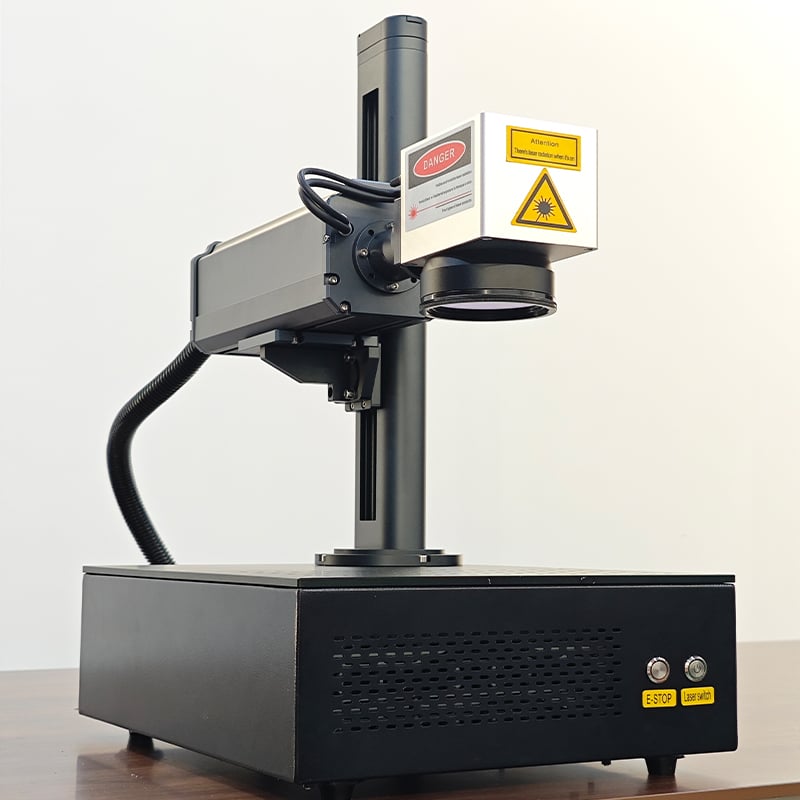
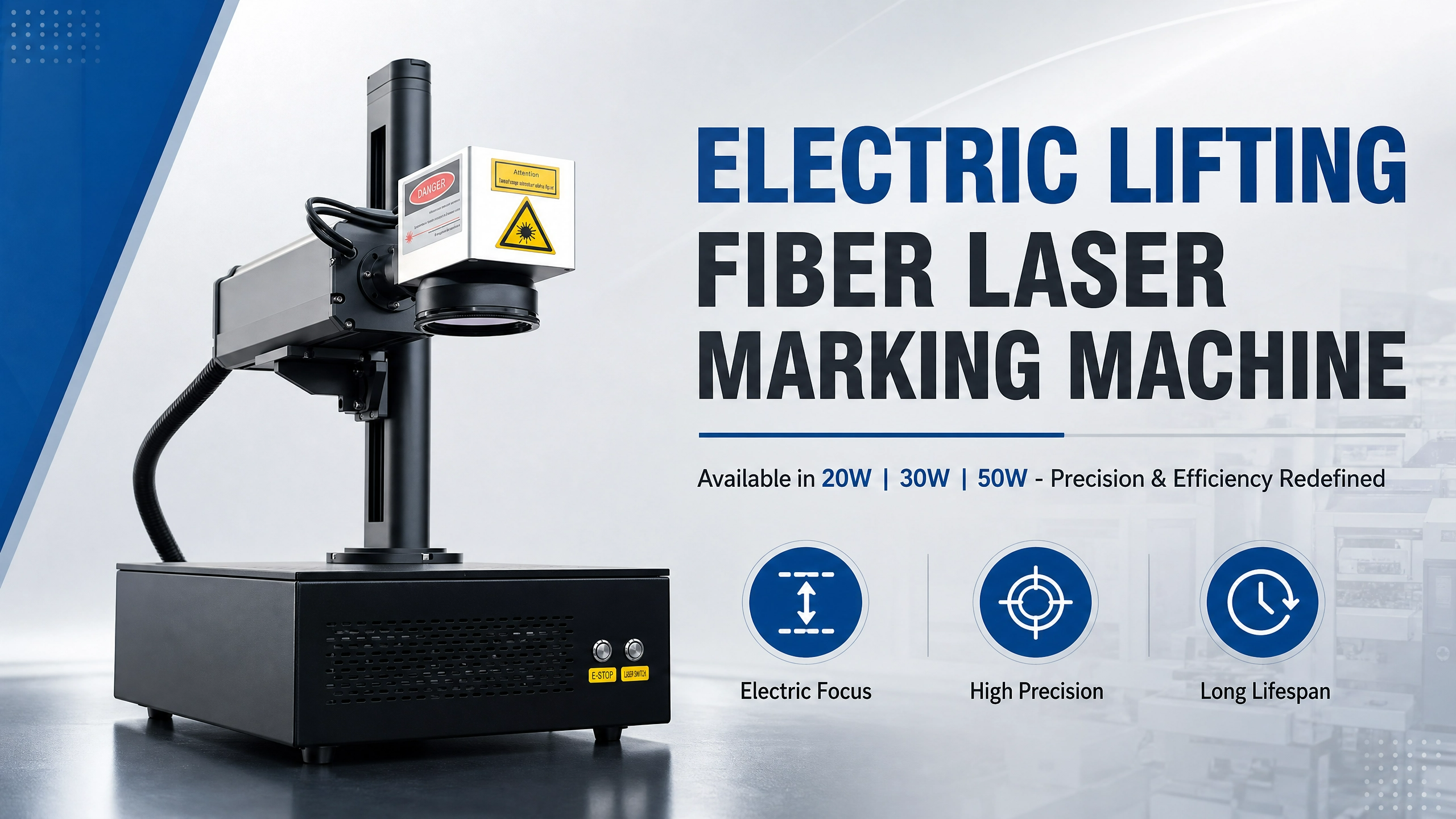
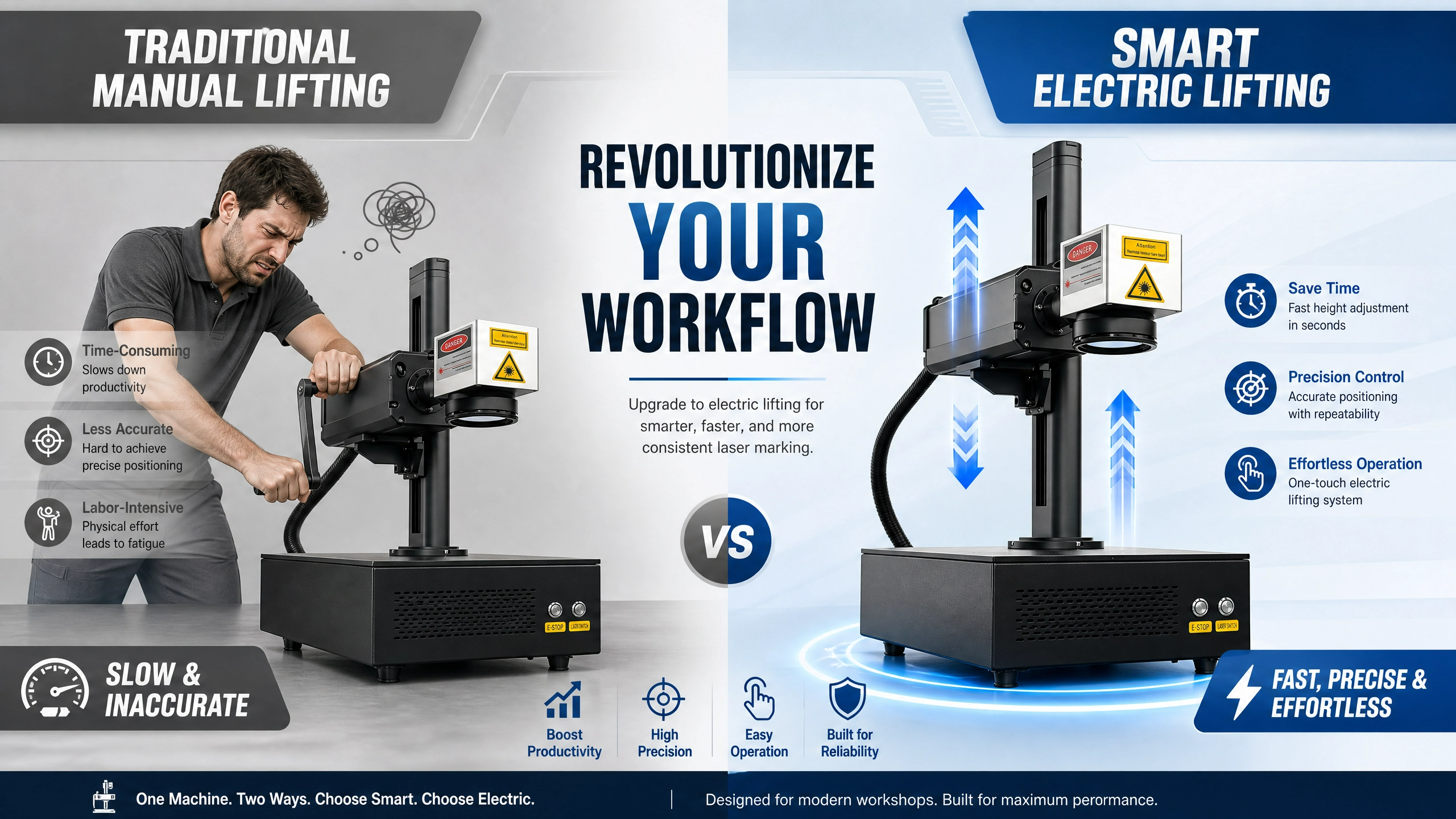
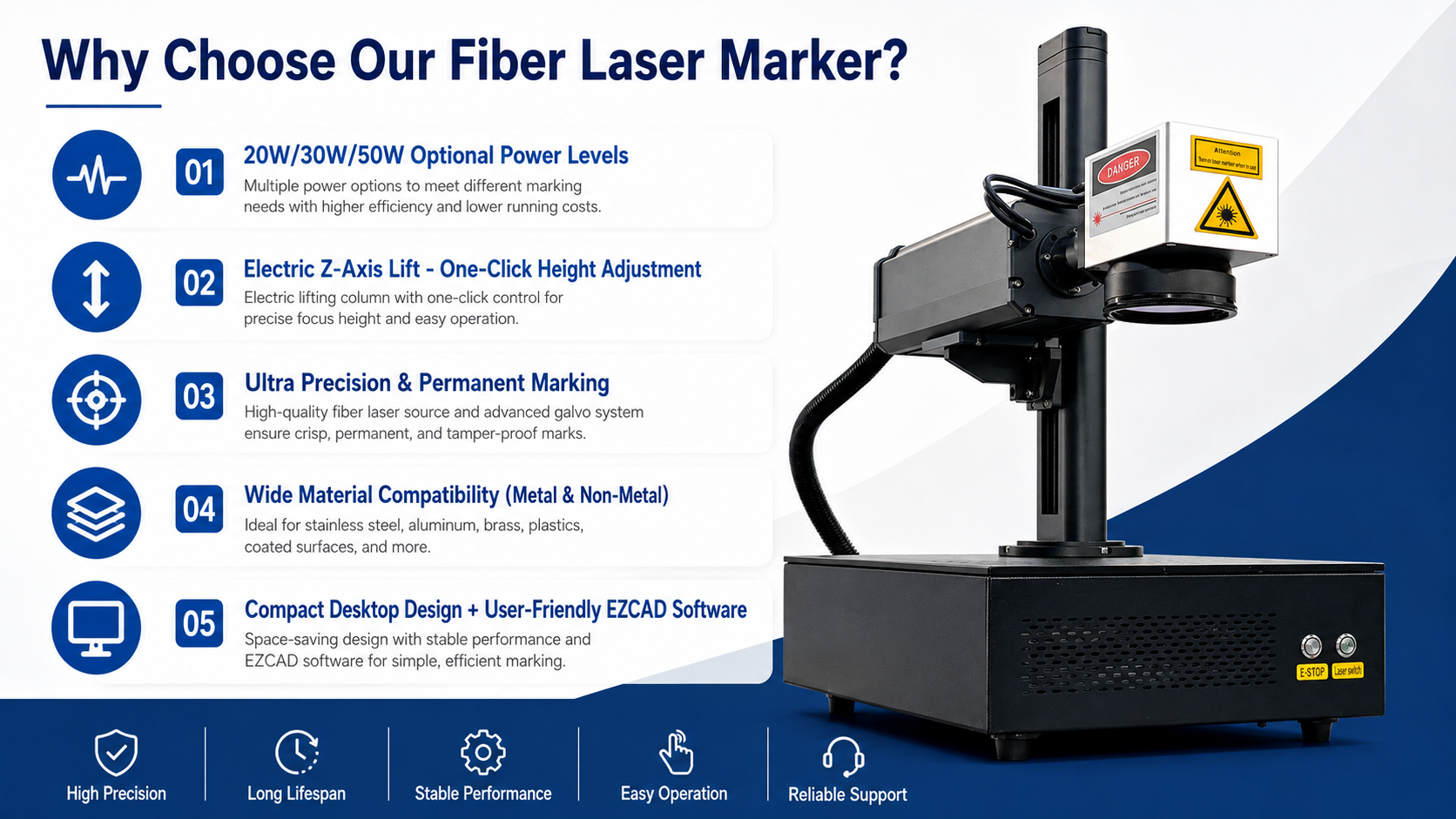
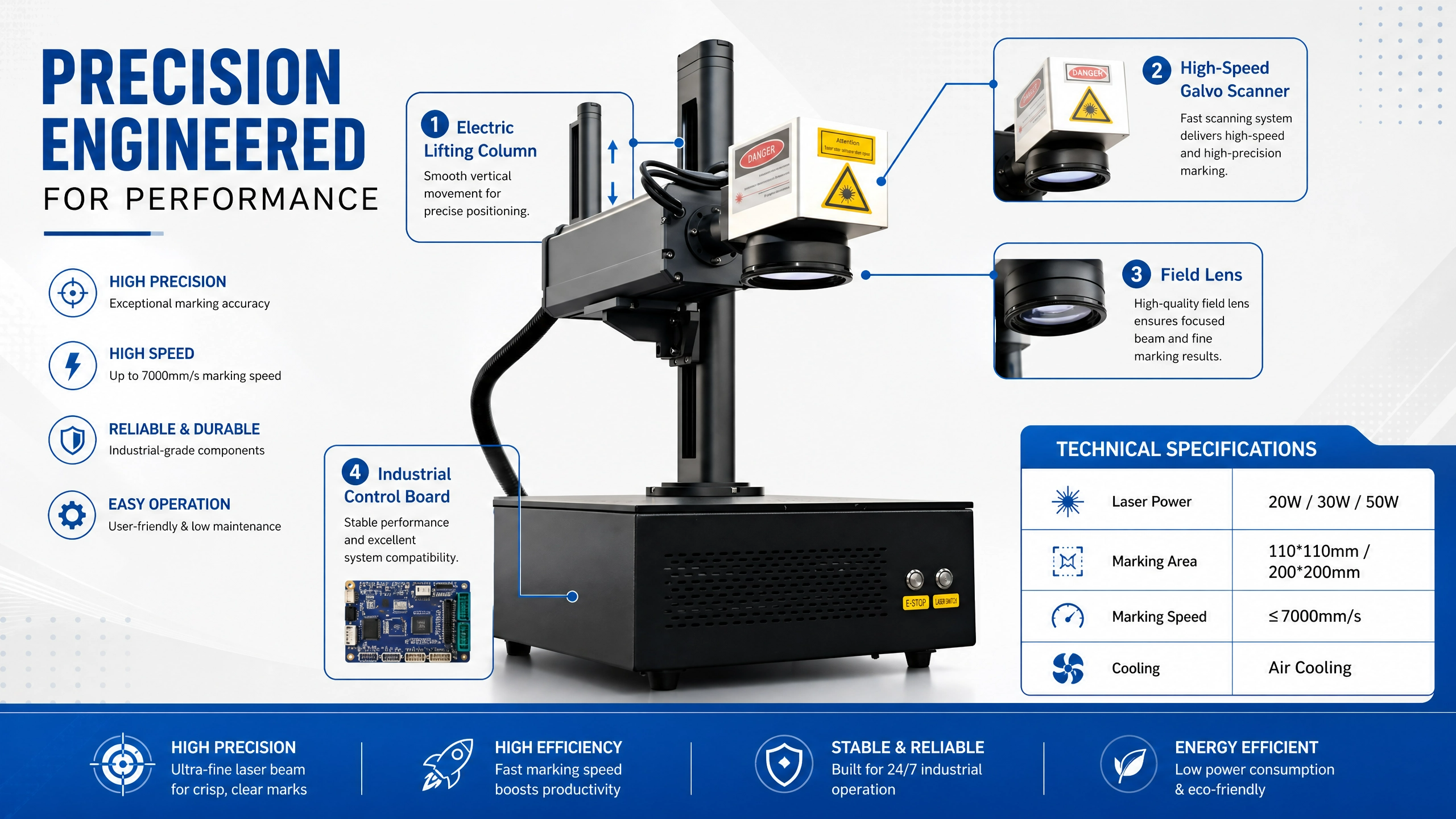
The Tianyu fiber laser marking machine brings metal personalization and engraving into a compact benchtop format. Select the power and optical configuration around your actual alloy, artwork and finish requirements. Thin-sheet cutting and 3D applications require configuration-specific validation.
30W · 50W · 60W · 100W | Pulsed fiber laser | Air-cooled benchtop design
A pendant needs a readable name. A metal emblem needs visible depth. A thin gold or silver blank needs a clean outline. These are different jobs—and they should not be judged by the same speed figure.
The Tianyu fiber laser marking machine brings metal personalization and engraving into a compact benchtop format. Select the power and optical configuration around your actual alloy, artwork and finish requirements. Thin-sheet cutting and 3D applications require configuration-specific validation.
Names, maker’s marks, fine linework and recessed designs serve different purposes. Start with the result you want to hold in your hand, then select the process.
| Your job | What to prioritize | What to evaluate |
|---|---|---|
| Jewelry personalization | Names, dates, logos and fine decorative details | Legibility, placement and surface finish on the actual alloy |
| Deep metal engraving | Recessed lettering, emblems and selected relief designs | Measured depth, flatness, edge definition and total cycle time |
| Metal identification | Serial numbers and machine-readable codes | Contrast and readability at the required mark size |
| Gold / silver thin-sheet cutting | Small outline shapes and jewelry blanks | Full separation, kerf, edge cleanup and recoverable material |
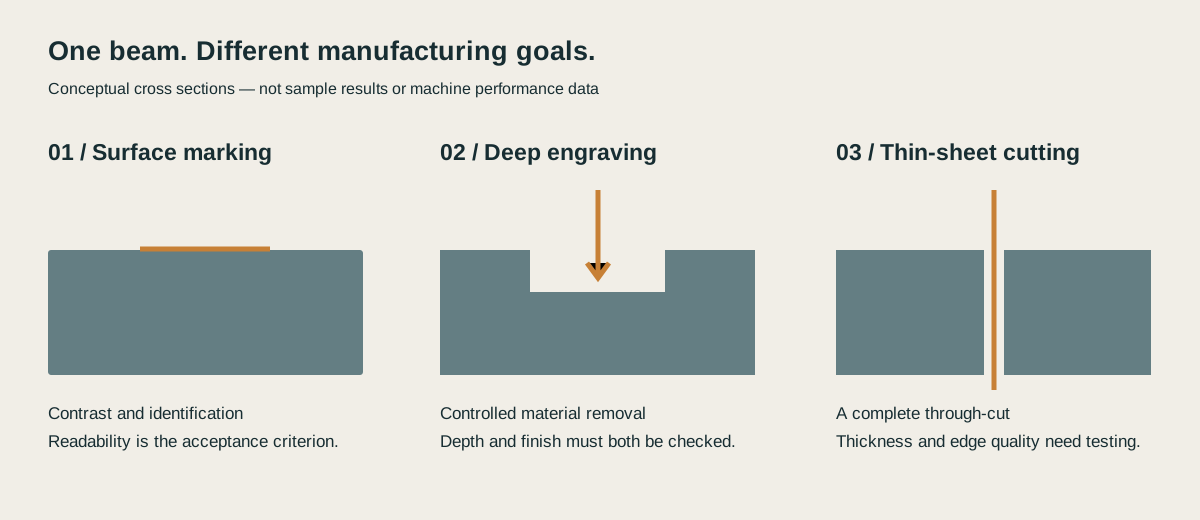
Process illustration only.
The four power options provide different starting points for process evaluation. Higher average output is not a guarantee of finer detail or a proportional increase in finished-part throughput. Pulse characteristics, lens, focus, hatch pattern and alloy all matter.
Selection guidance
| Power option | Useful starting point for evaluation | Nominal power vs. 30W | Decision to validate |
|---|---|---|---|
| 30W | Surface marking and lighter personalization work | 1.00× | Required contrast and acceptable cycle time |
| 50W | Mixed marking and repeated-pass engraving | 1.67× | Depth and finish across your regular jobs |
| 60W | Engraving workloads that justify a higher-output option | 2.00× | Actual source specifications and process window |
| 100W | Material-removal-heavy work and cutting trials | 3.33× | Heat control, edge finish and complete cycle time |
The ratios are calculated from the stated nominal power options only.
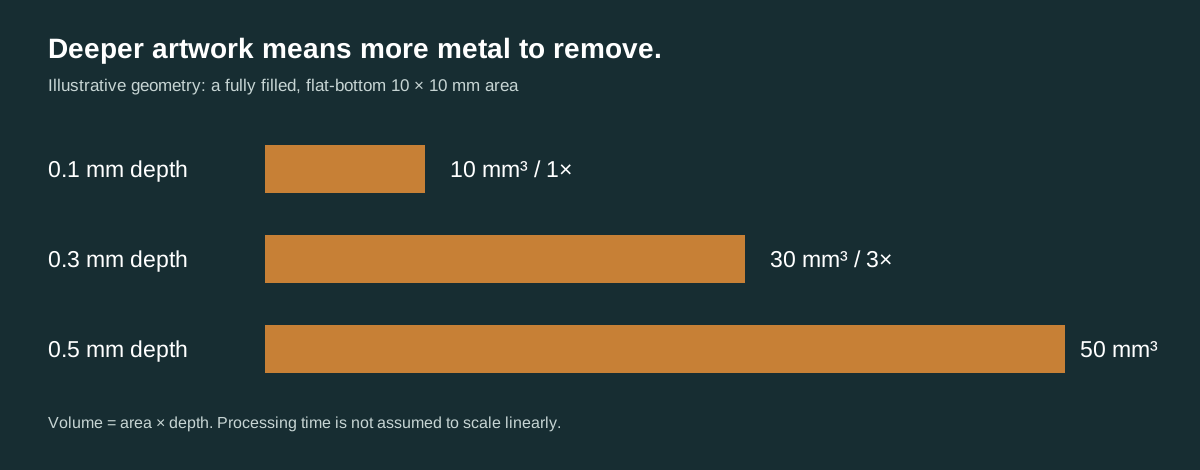
A fast-moving beam is only one part of a deep engraving cycle. Filling an area, repeating layers, managing focus and producing the desired finish all take time. For a fair comparison, keep the alloy, artwork area, target depth and finish requirement unchanged.
Illustrative calculation: volume = filled area × uniform depth
| Engraving area | Example target depth | Calculated removed volume | Volume relative to first row |
|---|---|---|---|
| 10 × 10 mm | 0.10 mm | 10 mm³ | 1× |
| 10 × 10 mm | 0.30 mm | 30 mm³ | 3× |
| 10 × 10 mm | 0.50 mm | 50 mm³ | 5× |
These are geometry calculations for comparison; actual cycle time depends on the artwork and process.
A useful comparison starts with the same drawing and an agreed surface finish.
| Material / part | Application to evaluate | Important check |
|---|---|---|
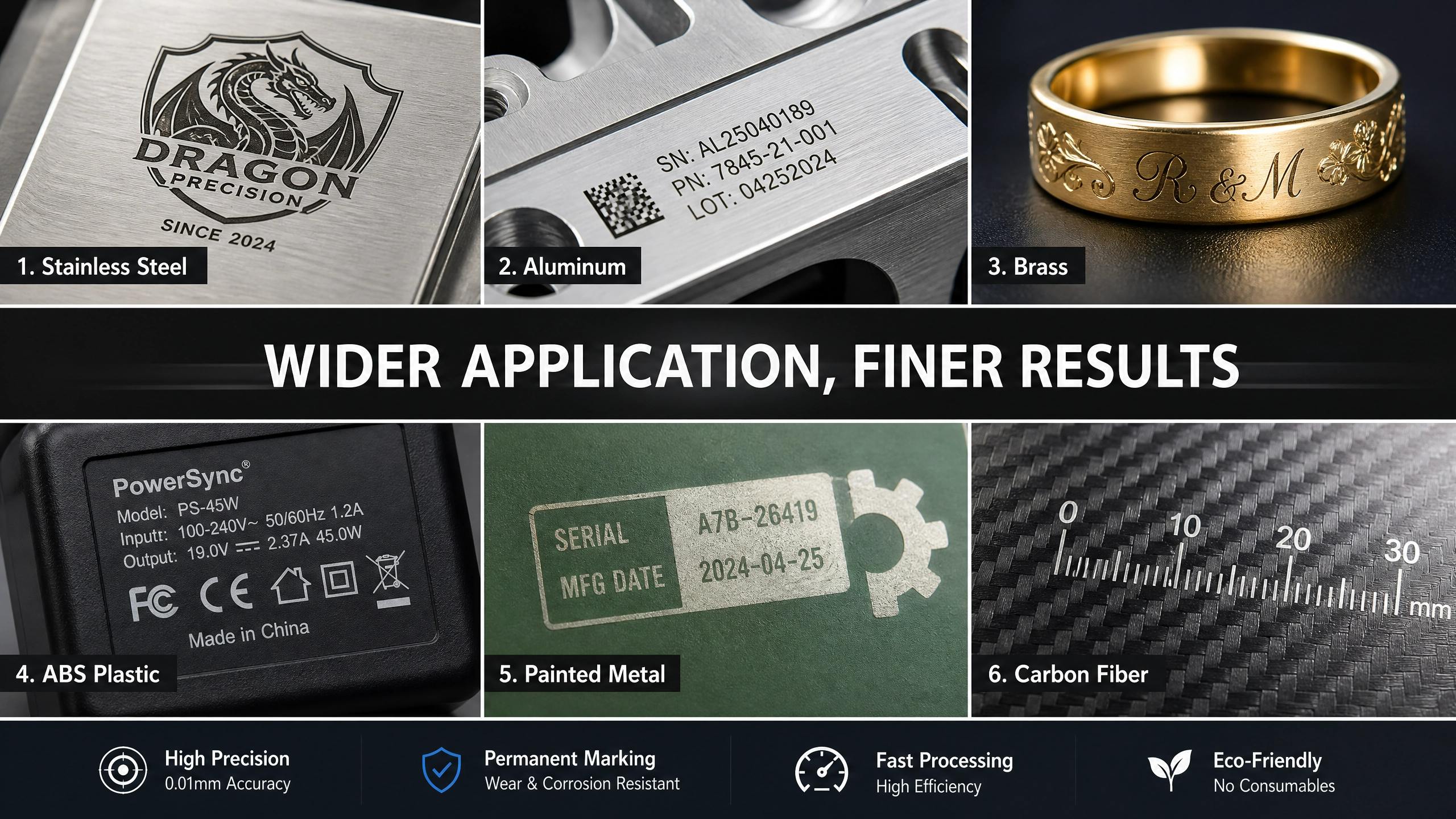
| Gold and gold alloys | Names, decorative engraving and thin-sheet outlines | Karat, alloy composition, thickness and finish |
| Silver and silver alloys | Personalization, recessed designs and outline cutting trials | Alloy, reflectivity, thermal response and edge quality |
| Stainless steel | Logos, identifiers and recessed engraving | Grade, contrast, corrosion requirements and depth |
| Brass / copper | Tags, emblems and selected engraving work | Exact alloy and laser-source suitability |
| Aluminum | Identification and decorative engraving | Bare versus anodized surface and required appearance |
| Rings and cylindrical parts | Circumferential or inner/outer engraving | Compatible rotary fixture, part size and working clearance |
The table lists application candidates. Unknown coatings, plastics and mixed materials need a separate suitability and emissions assessment.
Cutting means separating the sheet, not simply engraving a deep line. For jewelry blanks, evaluate thickness together with the alloy, smallest detail, holding method, edge finish and material loss. A successful cut on one silver alloy does not establish capacity for every gold alloy.
The listed 0.01–2 mm is an engraving-depth range, not a cutting-thickness specification; confirm cutting on a sample for your alloy.
| Term | What it means | What must be confirmed |
|---|---|---|
| 2D marking | Artwork is processed on a suitable focal plane | Lens, field size and flatness |
| Layered / relief engraving | Material is removed in layers to build depth | Software, Z-axis control and refocusing method |
| 3D dynamic-focus marking | The optical focal position changes across a shaped surface | A compatible 3-axis scan head and control system |
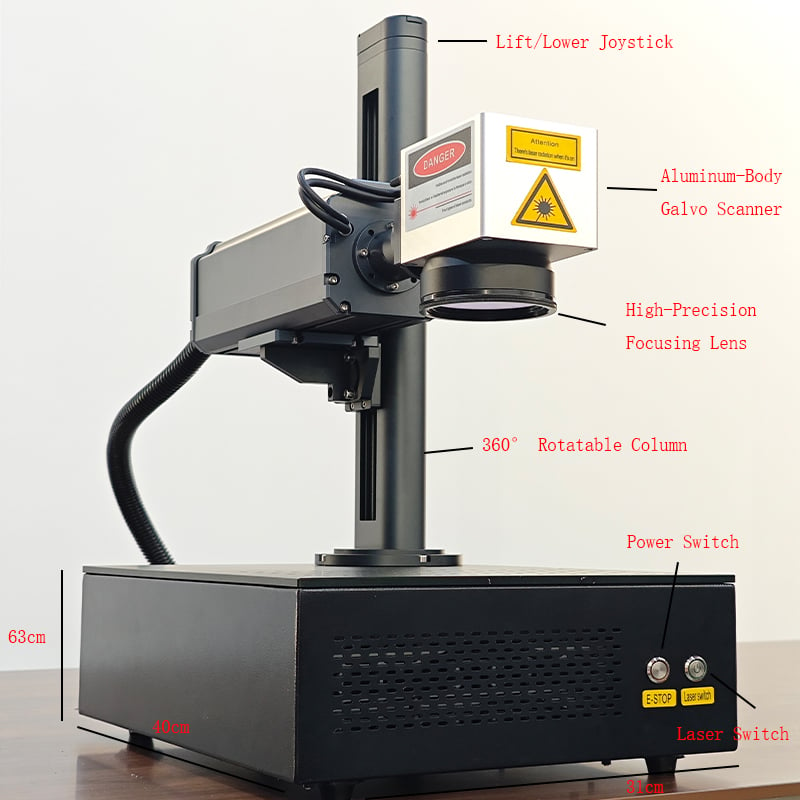
A height-adjustable column alone does not establish dynamic 3D capability. For curved jewelry, relief artwork or height-varying parts, identify the required process and confirm the installed hardware and software before ordering.
Product specifications (from the supplied brief). Source model, optics and laser parameters should be confirmed in writing for the quoted configuration.
| Item | Listed value | How to interpret it |
|---|---|---|
| Brand | Tianyu | As shown in the supplied product attributes |
| Nominal power options | 30W / 50W / 60W / 100W | Options supplied in the product brief |
| Laser type / operation | Fiber laser / pulsed | Laser-source model to be specified per configuration |
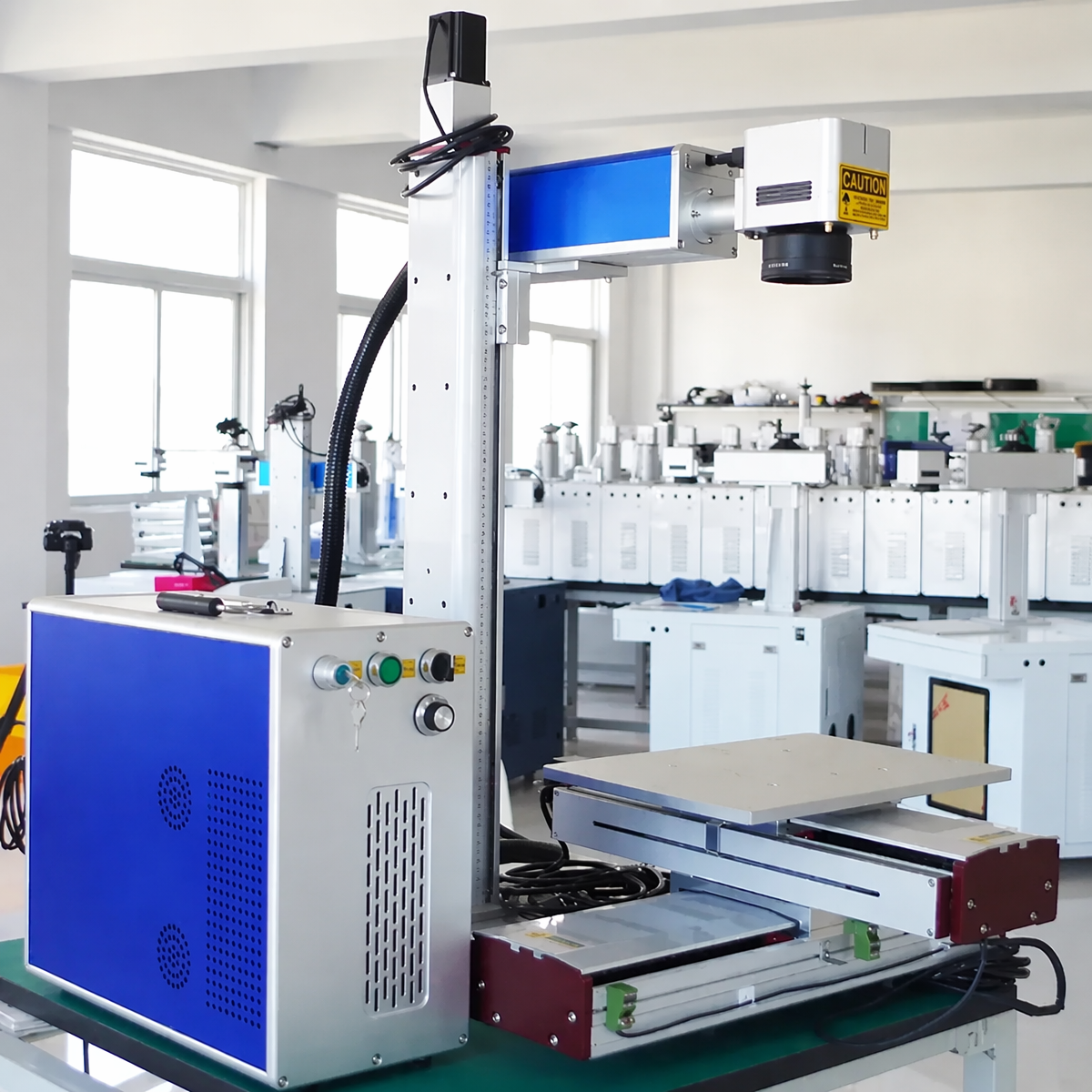
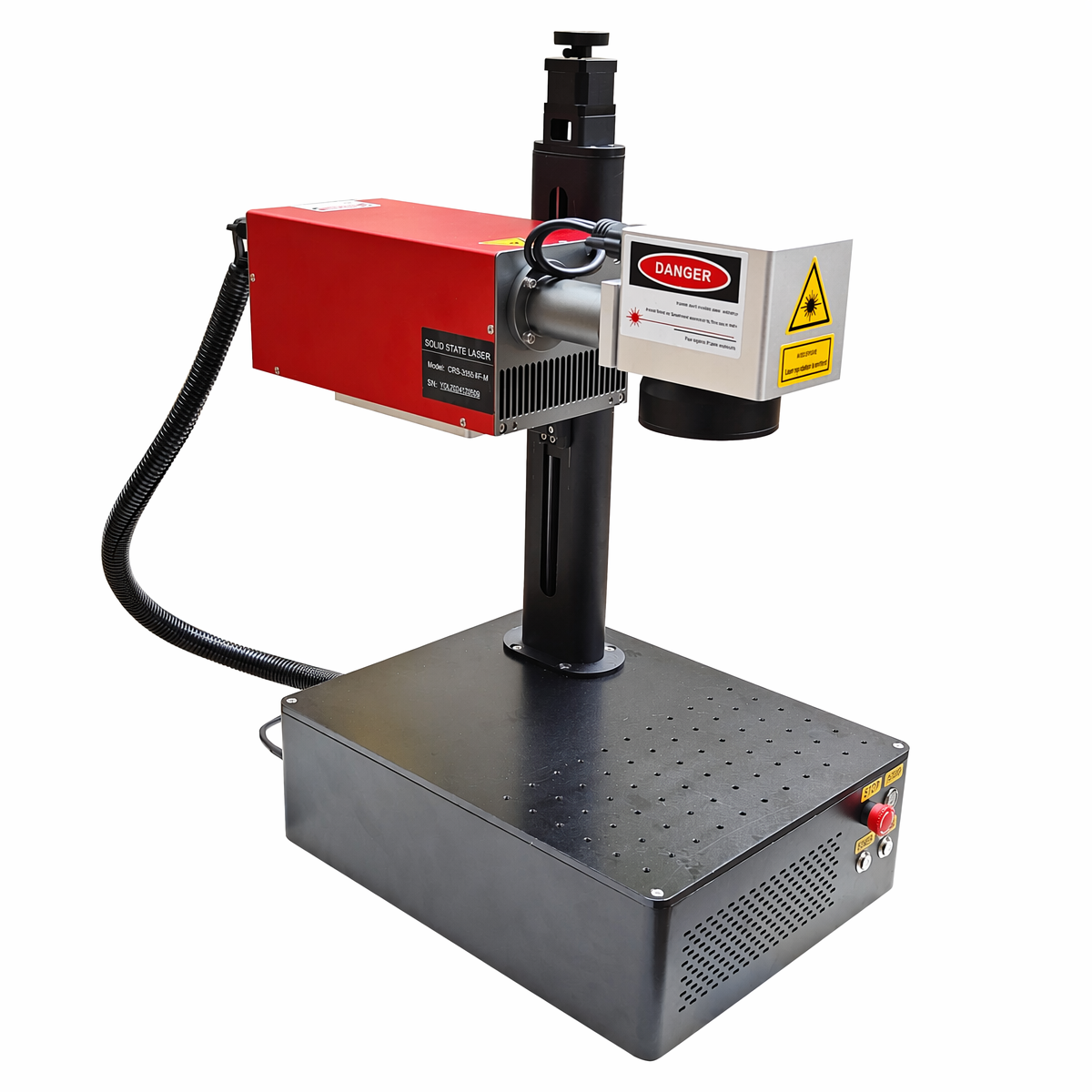
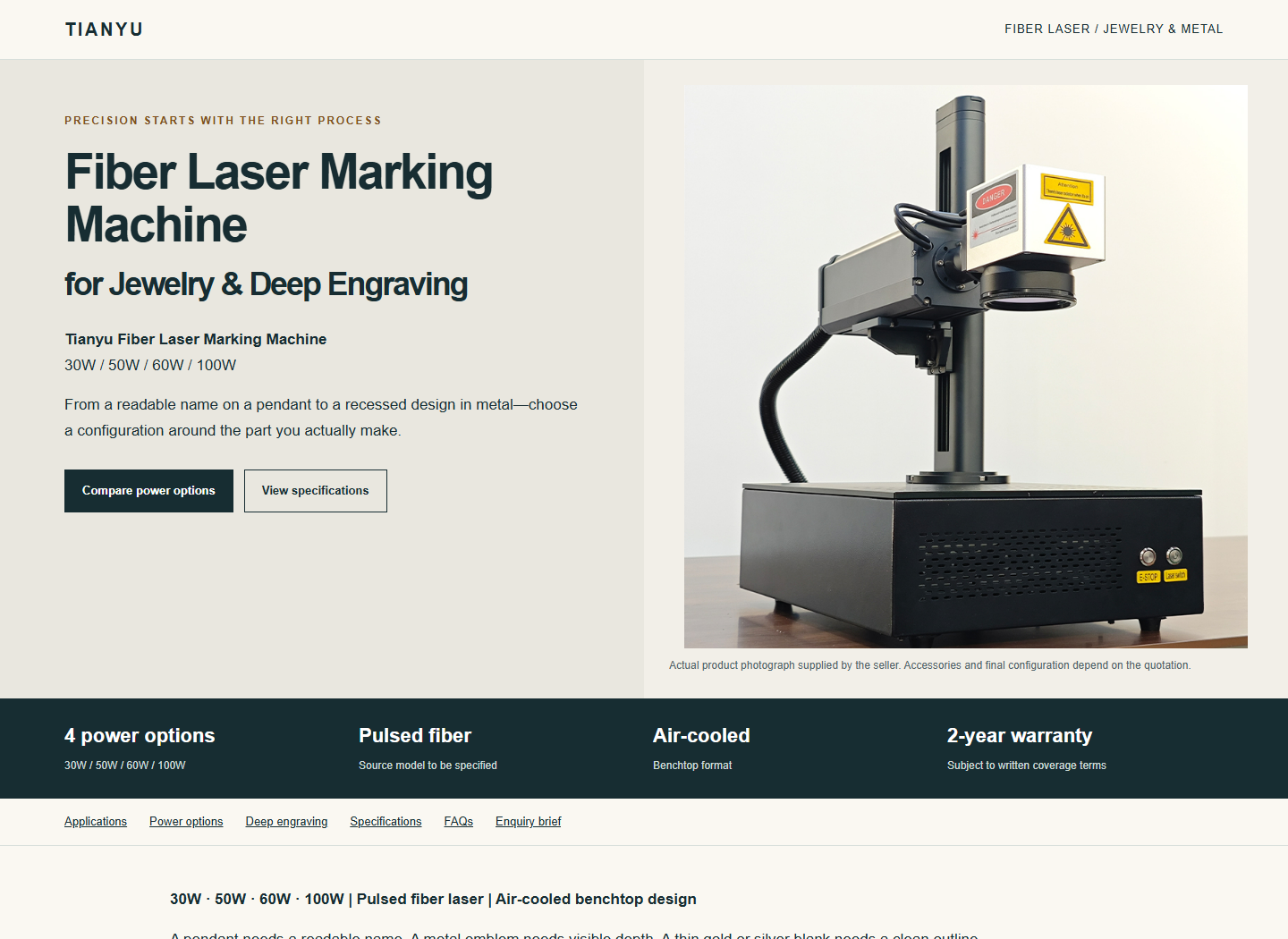
| Machine format | Benchtop | Open processing arrangement shown in the supplied photo |
| Cooling | Air cooling | No process-water specification supplied |
| Listed marking speed | 7,000–12,000 mm/s | Conditions not supplied; not a deep-engraving throughput claim |
| Listed marking depth | 0.01–2 mm | Material, passes, finish and cycle time not supplied |
| Listed working accuracy | 0.01 mm | Test method and conditions not supplied |
| Listed graphic formats | AI, PLT, DXF, DXP, PNG | Import behavior depends on software/version and artwork |
| Warranty period | 2 years | Coverage, exclusions and service terms require written confirmation |
| Origin | Hubei, China | As shown in the supplied product attributes |
Confirm laser wavelength, frequency, pulse width, working field, electrical supply and 3D options for the quoted model.
Choose around your main job: surface personalization, material removal or cutting. The alloy, required finish and cycle time are as important as nominal power. Compare the same representative part on the shortlisted configurations rather than choosing from wattage alone.
Thin-sheet cutting is an application to validate for the selected configuration. No verified gold or silver cutting-thickness chart has been supplied for this machine. Confirm alloy, thickness, outline, cut-through quality and finishing requirements before treating it as a production cutting solution.
No. Engraving depth and through-cutting capacity are different measurements. The listed 0.01–2 mm range does not specify the alloy, time or finish, and must not be used as a cutting-thickness guarantee.
The supplied photo and attribute table do not confirm a dynamic-focus scan head. Layered relief engraving and curved-surface 3D marking are different functions. Confirm the scan head, controller, software and focus-control method in the final configuration.
The brand name alone does not specify pulse control. Request the exact source model and its supported pulse-width and frequency ranges. Color marking and particular engraving effects must be validated on the actual material.
A suitable rotary fixture can support some ring and cylindrical jobs; other surfaces may need dynamic focus or dedicated fixtures. Confirm inner and outer diameters, part height, clearance and the exact marking location. A rotary attachment is not shown in the supplied photograph.
The listed 7,000–12,000 mm/s value is not a finished-part rate. Actual cycle time includes artwork filling, multiple passes, positioning and finishing. Specify your alloy, artwork dimensions, target depth and quality criteria for a useful comparison.
The supplied attributes list a two-year warranty. Confirm the covered components, consumable exclusions, support channels and shipping responsibility in the written sales terms. A warranty period alone does not establish the full service scope.
The most useful enquiry is not “What is your fastest machine?” It is “Can this configuration make this part, to this finish, within this cycle time?” Prepare the details below for a configuration-specific quotation.
Suggested enquiry: “I need to engrave [design size] on [material/alloy] to [target depth], with [finish requirement], at [daily quantity]. Please specify the source, optics, controller, accessories and test conditions for the recommended configuration.”
The following independent manufacturer references explain process principles; their results are not Tianyu specifications or endorsements.

 EN