
 EN
EN



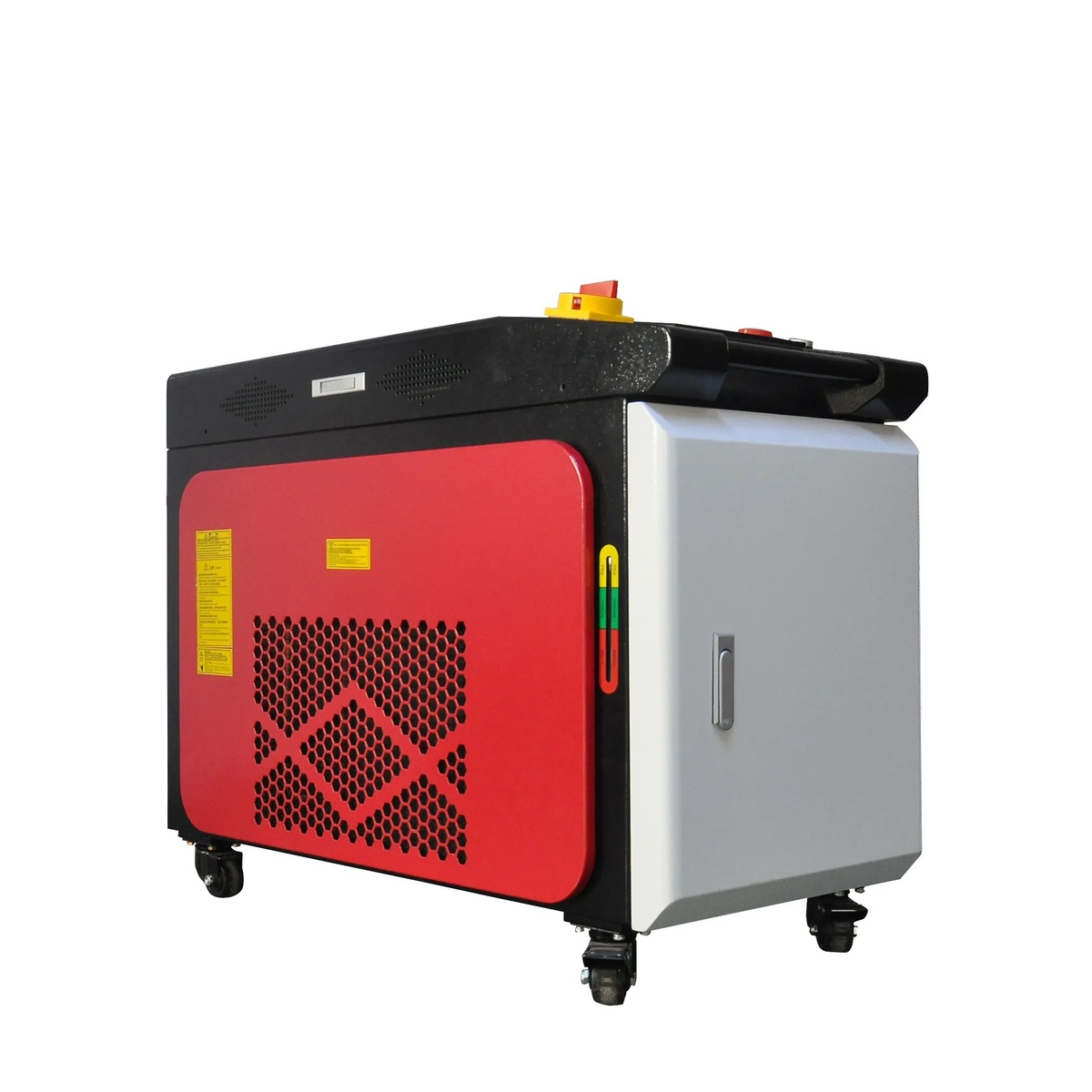
What Goes Wrong with a Handheld Fiber Laser Welding Machine — and How to Fix It
A handheld fiber laser welding machine that stops delivering a stable welding beam mid-shift is not a mystery to be solved by the manufacturer's service hotline. Four component categories account for roughly 90% of all handheld laser welding failures: the beam delivery optics, the wire feeding system, the shielding gas flow, and the control system. Each category produces characteristic symptoms that point directly to the root cause — provided the operator knows what to look for.
Maohe Tianyu Laser Equipment, manufacturing handheld fiber laser welding machines from its ISO/CE-certified Wuhan production base with an elite R&D team averaging 10+ years of industry experience, designs its handheld welders with operator-accessible diagnostics: control-panel fault codes, visible beam-path indicators, and the EZCAD-based interface that displays real-time welding parameters. The following four troubleshooting sequences cover the failures that most frequently interrupt production.
Fault Category 1: No Beam Output or Weak Beam
Check the Protective Window First
The handheld welding head's protective window — the transparent cover that shields the focusing lens from weld spatter — accumulates metal vapor deposits with every weld. After 30–60 minutes of continuous operation, a visibly darkened window absorbs enough laser energy to reduce beam power at the workpiece by 30–50%, producing welds that look under-penetrated even with the power setting unchanged. The fix takes 30 seconds: remove the protective window, inspect it against a light source, and replace if visibly darkened. Maohe Tianyu's handheld fiber laser welding machines ship with spare protective windows and a quick-change mechanism that requires no tool disassembly.
Check the Fiber-Optic Cable Connection
The fiber-optic cable that delivers laser energy from the source to the handheld head must maintain a clean, fully seated connection at both ends. A partially unseated connector creates an air gap that causes internal reflection and power loss. The symptom: the laser source powers on and displays normal output, but welding power at the workpiece is visibly weak. The fix: disconnect, inspect both connector faces for contamination under magnification, clean with optical-grade solvent if needed, and reconnect until the mechanical lock engages with an audible click.
Real-World Application: A Job Shop's Five-Minute Fix
A metal fabrication job shop running a Maohe Tianyu handheld fiber laser welding machine on stainless steel kitchen-equipment assemblies had a welder report that the beam was "barely melting the surface" despite the machine displaying 1,500W output. The shop supervisor had called for a service technician — estimated arrival: next day — when a second operator recalled the protective-window check from training. The window was nearly opaque with spatter deposits after three hours of continuous aluminum welding earlier in the shift. Replacing the window restored full beam power in under five minutes, saving a day of downtime and a $400 service call for what was essentially a consumable replacement.
Frequently Asked Questions
Why does my handheld fiber laser welding machine produce porous welds?
Weld porosity — small gas pockets trapped in the solidified weld bead — is almost always a shielding gas problem. Check that the gas cylinder has pressure (not empty), the flow rate is set to 10–15 L/min (not accidentally reduced), and the gas nozzle is not clogged with spatter. Insufficient gas coverage allows atmospheric oxygen and nitrogen to dissolve into the molten weld pool.
Why is the wire feeder jamming or feeding inconsistently?
Wire feed problems have three common causes: the wire spool tension is set too high (reduce drag until the wire pulls freely), the feed rollers are worn or the wrong size for the wire diameter, or the wire liner inside the torch cable is kinked or clogged with metal dust. Clean or replace the liner every 50–100 hours of operation.
What causes the laser to pulse instead of maintaining continuous output?
Pulsing during continuous-wave mode usually indicates a thermal overload — the chiller is not maintaining the laser source temperature within specification. Check the chiller water level, verify the chiller is powered on and circulating, and clean the chiller air filter if airflow is restricted. Allow the laser source to cool for 20 minutes before restarting.
How often should I clean the protective window?
Inspect the protective window every 2 hours of continuous welding. Replace when visible darkening covers more than 20% of the window area. High-spatter applications (aluminum, galvanized steel) may require replacement every 30–60 minutes. Maohe Tianyu includes spare protective windows and recommends keeping at least five on hand during production shifts.
What do the error codes on the control panel mean?
Common codes include: "Temperature Alarm" (chiller failure or ambient temperature above 40°C), "Beam Delivery Fault" (fiber cable disconnect or protective window contamination), "Gas Pressure Low" (shielding gas cylinder empty or regulator malfunction), and "System Interlock" (safety circuit open — check that all enclosure doors and emergency stops are closed). Maohe Tianyu provides a full error-code reference in the user manual.
Can I weld aluminum with a handheld fiber laser welding machine?
Yes — but aluminum requires different parameters than steel. Use higher power (typically 1,200–1,500W for 2–3 mm aluminum), argon shielding gas (not nitrogen or CO₂), and clean the aluminum surface immediately before welding to remove the oxide layer that melts at 2,072°C versus aluminum's 660°C. Maohe Tianyu's application team provides material-specific welding parameters for handheld fiber laser welding machine setups.