
 EN
EN


The Material Versatility of Laser Cleaning Technology
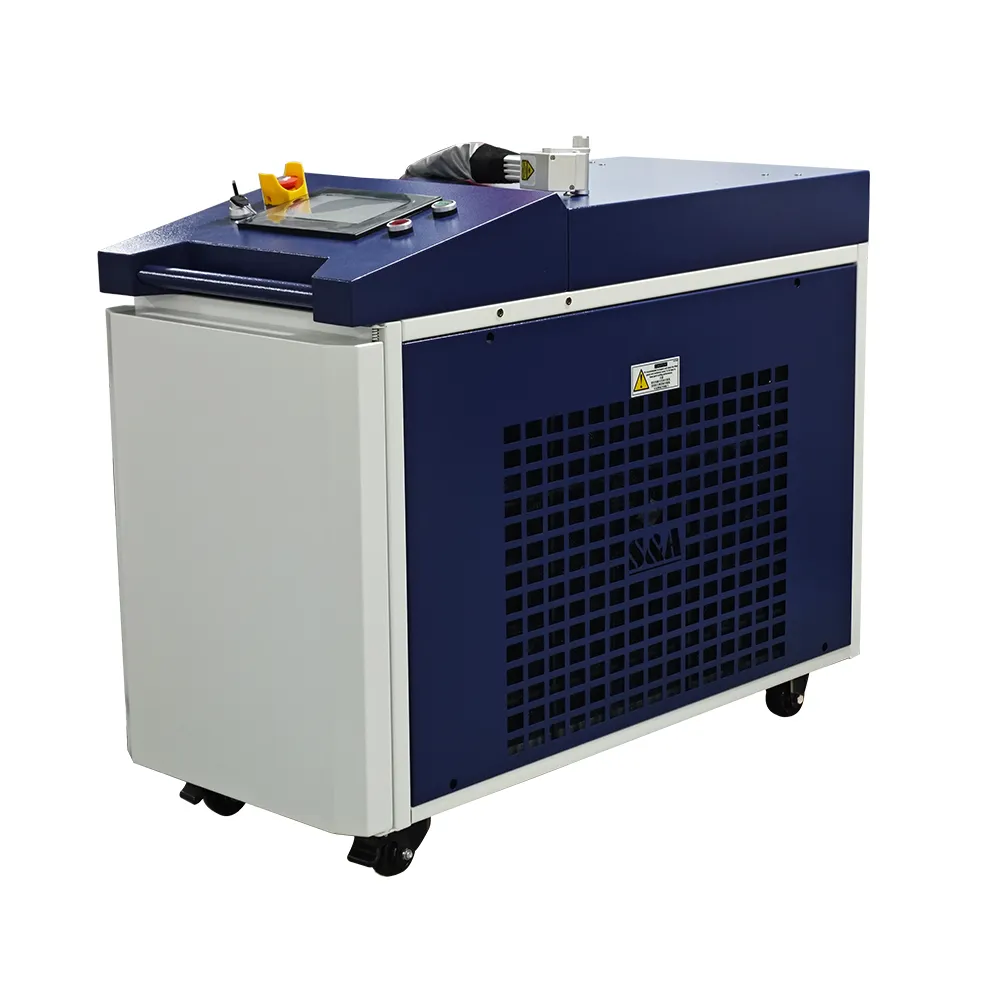
Laser cleaning has moved from laboratory curiosity to routine industrial use. The principle is simple — high-energy laser pulses vaporize surface contaminants without damaging the underlying substrate. A laser cleaning machine makes this process controllable and repeatable, handling materials from delicate museum artifacts to heavy industrial machinery. Understanding which materials respond well to laser cleaning determines whether this technology fits a specific production or maintenance environment.
How a Laser Cleaning Machine Works
The cleaning process relies on selective absorption. The laser pulse is absorbed by the contaminant — rust, paint, oil, oxide — causing it to vaporize almost instantly. The substrate absorbs less energy at the same wavelength and remains largely unaffected. Pulsed fiber lasers in the 50 to 500 watt range dominate industrial cleaning applications. Pulse duration, measured in nanoseconds, controls whether energy stays at the surface or penetrates deeper. A laser cleaning machine with adjustable pulse settings handles multiple material types without hardware changes.
Materials That Respond Well
Carbon steel and stainless steel are the most commonly cleaned substrates. Rust removal is the largest single application — a rusted steel plate requiring 30 minutes of abrasive blasting can be laser cleaned in 5 to 8 minutes with zero secondary waste. Stainless steel benefits particularly because laser cleaning does not embed carbon particles, which abrasive methods frequently leave behind.
Aluminum and copper are highly reflective at infrared wavelengths, but their oxide layers absorb more energy than the base metal, allowing selective removal. A laser cleaning machine removes aluminum oxide before welding, eliminating the porosity that oxide contamination creates in weld joints.
Tool steels and cast iron respond well for mold and die maintenance. Injection mold cavities accumulate carbonized residues that laser cleaning removes without altering cavity geometry — abrasive methods inevitably wear precision surfaces.
Materials Requiring Careful Parameter Control
Painted and coated surfaces require sequential passes at different power densities because the topcoat absorbs laser energy differently than the primer. Operators should begin with low-power test patches. A laser cleaning machine with stored parameter profiles for different paint systems avoids trial-and-error during production.
Carbon fiber reinforced polymer is laser-cleanable but demands the most careful control. The cleaning threshold must be lower than the composite damage threshold — a narrow margin that aerospace facilities have successfully navigated for paint removal on aircraft panels.
Materials Generally Unsuitable
White ceramics crack under thermal shock from laser pulses. Transparent glass allows most energy to pass through rather than absorbing it on surface contaminants. Galvanized steel with thick zinc coatings requires fume extraction systems that many installations lack.
A Practical Case: Tooling Maintenance Optimization
A tier-one automotive stamping supplier in Mexico operated 14 press lines requiring daily die cleaning to remove drawing compound buildup. Manual abrasive cleaning consumed 32 labor hours weekly and gradually wore die radii, forcing reconditioning every 18 months instead of 36.
The supplier introduced a laser cleaning machine integrated with an existing fiber laser system through a switchable beam delivery path. Die cleaning time dropped from 2.5 hours per line to 45 minutes. Labor was reduced to one operator covering all 14 lines. Die reconditioning intervals returned to 36 months. The system paid for itself within 10 months through labor savings and extended die life.
Selecting a Laser Cleaning Machine
Key Specification Parameters
The most important decision is whether the facility needs a dedicated laser cleaning machine or can configure an existing laser source for cleaning with a beam delivery upgrade. Shops performing both welding and cleaning on similar materials benefit from combined systems. ISO 8501-1 provides surface cleanliness standards for steel preparation that laser cleaning meets or exceeds. TY Laser offers multi-purpose fiber laser systems configurable for cleaning, welding, and marking from a single laser source.
Operational Considerations
Laser cleaning generates vaporized contaminant that requires fume extraction. The extraction system should be sized for the expected cleaning rate — removing 1 square meter of rust per hour produces a specific volume of particulate. Pre-filters capture larger particles; HEPA final filters protect the work environment.
Frequently Asked Questions
Can a laser cleaning machine damage the underlying surface?
With correct parameters, laser cleaning removes less than 1 micrometer of base material per pass. Incorrect settings with excessive power can cause surface melting — parameter testing on sample material before production cleaning is standard practice.
What is the maximum rust thickness a laser cleaning machine can remove?
Light to moderate rust up to 0.2 millimeters is removed in a single pass. Thicker corrosion requires multiple passes. Heavy rust above 0.5 millimeters may be more cost-effectively reduced by mechanical methods before final laser cleaning.
How does laser cleaning compare to abrasive blasting in operating cost?
Laser cleaning eliminates media purchase, handling, and disposal costs that account for 40 to 60 percent of abrasive blasting expenses. Per-square-foot cost is lower for applications exceeding 500 square feet per month.
What maintenance does a laser cleaning machine require?
Optics cleaning is the primary maintenance task — contaminant vapor deposits on the protective lens and reduces beam quality. Lens cleaning should be performed per the manufacturer's schedule. Fume extraction filter replacement depends on cleaning volume and contaminant type.
Which industries use laser cleaning most extensively?
Automotive manufacturing, aerospace maintenance, tool and die, and marine maintenance lead adoption. Surface preparation before welding and coating is the fastest-growing application. TY Laser supplies laser cleaning machine systems across these industry sectors.
Is a laser cleaning machine safe for food contact surfaces?
Laser cleaning leaves no chemical residues and does not embed foreign particles. Stainless steel food processing equipment cleaned by laser passes bacterial adhesion tests at levels comparable to electropolished surfaces.