
 EN
EN


Laser Radiation Hazards — Eye and Skin Protection
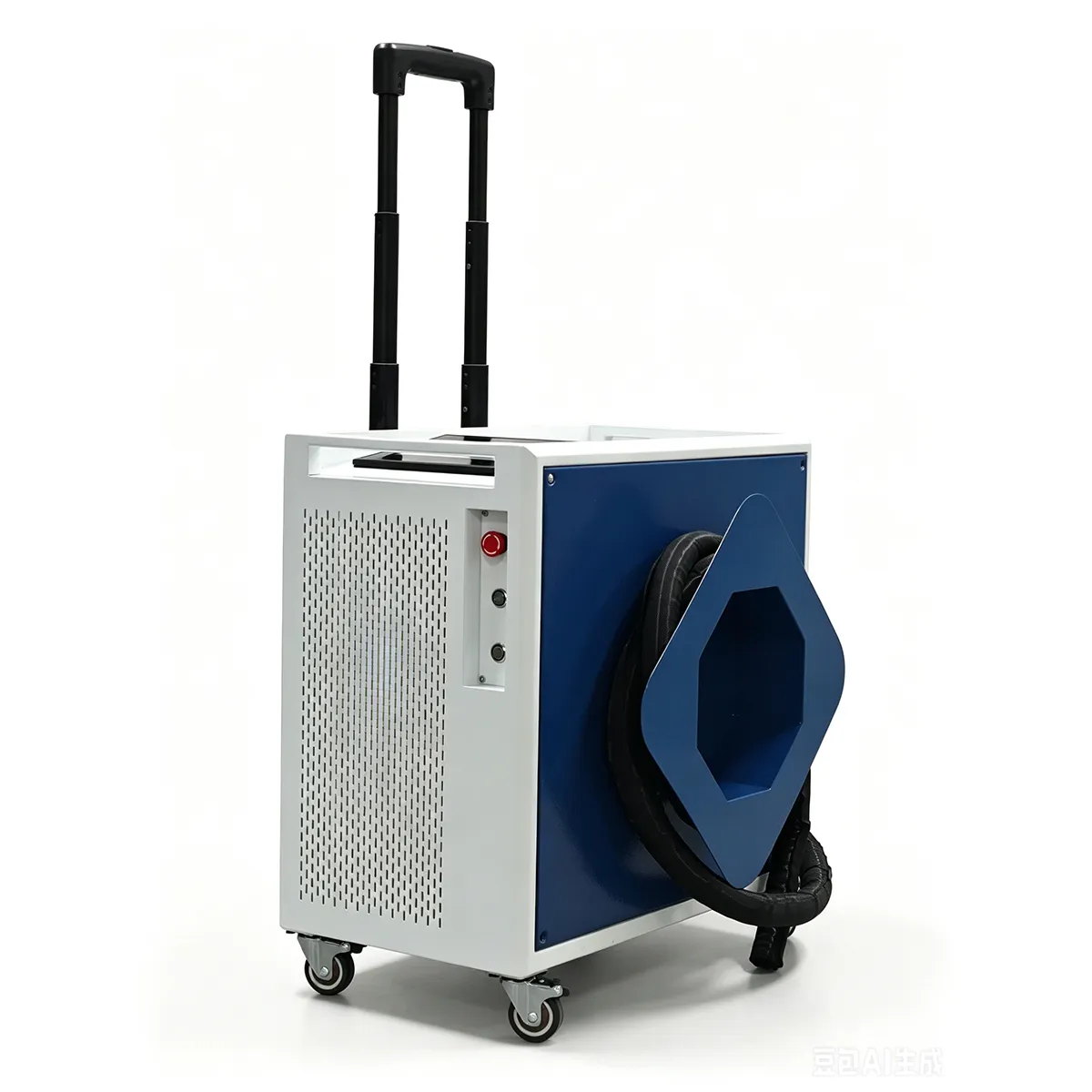
A laser cleaning machine operating at 1,064 nm in the infrared spectrum produces a beam invisible to the human eye. The absence of a visible beam creates the most dangerous safety condition — the operator cannot see the hazard, yet a reflected beam can cause permanent retinal damage in under 0.25 seconds, faster than the blink reflex. Eye protection is the first and non-negotiable precaution.
Wavelength-Specific Goggles, Class IV Enclosure Requirements, and Beam Reflection Risks
Laser safety goggles for a laser cleaning machine must match the laser wavelength. For a 500W 1,064 nm fiber laser, goggles with OD 6+ at 1,064 nm attenuate the beam to 0.0001% of incident energy — sufficient for accidental exposure. Goggles rated for visible wavelengths do not protect against infrared. A Class IV laser — any laser cleaning machine above 0.5W — requires either a fully interlocked enclosure or a controlled zone with warning signs, floor markings, and door interlocks. Reflective surfaces — polished metal, mirrors, glass — must be removed or covered with matte material. A beam reflected from a concave metallic surface can focus tighter than the original beam, increasing power density.
Real-World Case — A Fabrication Shop Upgrades Its Laser Safety Protocol
A metal fabrication shop using a laser cleaning machine for weld preparation experienced a near-miss incident when a trainee operator entered the cleaning cell without goggles during an active cleaning cycle. The laser was pointed downward at a steel plate, but a small stainless steel bracket lying on the workbench reflected a portion of the beam toward the doorway. The trainee saw no visible light and assumed the laser was off. The shop upgraded its protocol in partnership with TYLASER (Wuhan Maohe Tianyu Laser Equipment), a laser equipment manufacturer with 15 years of experience and clients in over 140 countries. Changes included: a door-interlocked Class I enclosure retrofitted to the workstation, IR-detector warning lights at the cell entrance that illuminate when the laser is firing regardless of visible output, and mandatory laser safety officer sign-off on the pre-operation checklist before each shift. No further entry incidents occurred in the 18 months following the upgrade.
Fume Extraction and Air Quality Management
Particulate Composition, HEPA Filtration, and Toxic Fume Capture for Coated Surfaces
A laser cleaning machine ablates material — rust, paint, oil, epoxy — converting it to airborne particulate. The fume composition depends on the contaminant: iron oxide dust from rust is a respiratory irritant; lead chromate from industrial paint is a carcinogen; hexavalent chromium from stainless steel has an OSHA limit of 5 µg/m³. HEPA filtration (99.97% at 0.3 µm) is minimum for rust removal. Paint stripping requires multi-stage HEPA plus activated carbon for VOCs. The extraction nozzle must be within 100 to 150 mm of the laser spot — beyond this, the plume disperses before capture.
Fire Prevention and Surface Preparation
Flammable Residue, Ignition Sources, and Fire Watch Protocols
A laser cleaning machine generates surface temperatures of 200°C to 500°C — above the autoignition point of oil residues (260°C to 370°C) and solvent residues (180°C to 300°C). Degrease visibly oily surfaces before processing. A Class B and Class D fire extinguisher must be within 3 meters of the cleaning station. A fire watch — a second person observing the process — is required for unknown coatings, enclosed spaces, or magnesium/titanium materials. The fire watch stays 30 minutes after the last cycle.
Operator Training and Workspace Controls
Laser Safety Officer Role, Controlled Access Zones, and Pre-Operation Checklists
Every facility operating a laser cleaning machine must designate a Laser Safety Officer (LSO) per ANSI Z136.1 or EN 60825-1. The LSO is responsible for hazard classification, defining the nominal hazard zone, and maintaining the controlled access zone. Pre-operation checklists must confirm: laser goggles present with verified OD rating, fume extraction operational, controlled access barriers in place with interlocks tested, fire extinguisher present, and surface inspected for reflective objects and flammable residue. TYLASER provides installation training and safety documentation with every laser cleaning machine.
Frequently Asked Questions
What eye protection is required for laser cleaning?
A laser cleaning machine requires laser safety goggles with OD 6+ at the specific laser wavelength (typically 1,064 nm for fiber lasers). Goggles rated for visible wavelengths do not protect against infrared. TYLASER provides wavelength-matched safety goggle specifications with each machine.
Does laser cleaning produce hazardous fumes?
Yes. A laser cleaning machine produces particulate and vapor from ablated material. Rust generates iron oxide dust. Paint removal can release lead, chromium, or organic vapors. HEPA filtration is the minimum; activated carbon stages are required for paint and coating removal.
Can a laser cleaning beam reflect and cause injury?
Yes. A laser cleaning machine beam at 1,064 nm reflects off polished metal, glass, and even some matte surfaces. A concave reflection can focus to higher power density than the original beam. Remove or cover all reflective surfaces in the cleaning area.
What fire precautions are needed for laser cleaning?
A laser cleaning machine requires degreasing of visibly oily surfaces before processing, a Class B and Class D fire extinguisher within 3 meters, and a fire watch for unknown coatings or enclosed spaces. The fire watch stays 30 minutes after the last cycle.
What safety enclosures are needed for a Class IV laser?
A Class IV laser cleaning machine requires a fully interlocked enclosure or a controlled access zone with physical barriers, warning signage, and door interlocks that shut off the laser if the zone is entered.
Who is responsible for laser safety in a facility?
A designated Laser Safety Officer (LSO) per ANSI Z136.1 or EN 60825-1 manages all laser cleaning machine safety — hazard classification, controlled access zones, PPE verification, and pre-operation checklist compliance.