
 EN
EN


How Laser Rust Removal Actually Works
Laser rust removal is a physical process in which high-energy laser pulses strike the rust layer and convert it directly into vapor or microscopic debris. The laser beam, at 1,064 nm wavelength from a pulsed fiber laser source, is absorbed approximately 95% by iron oxide (rust) while clean steel reflects most remaining energy. This selective absorption makes the process substrate-safe: rust absorbs the energy and ablates; the metal underneath stays cool.
Photothermal Ablation and Plasma-Induced Spallation
Two mechanisms drive laser rust removal. In photothermal ablation, nanosecond laser pulses heat rust beyond its vaporization threshold — approximately 3,000°C at the laser spot — causing sublimation from solid to gas. In plasma-induced spallation, the pulse creates a high-pressure plasma plume at the rust-metal interface that expands, generating a shockwave fracturing and ejecting remaining rust. The combination removes rust thermally and mechanically in a single pass, without abrasives, water, or chemicals.
Real-World Case — A Steel Fabricator Replaces Sandblasting
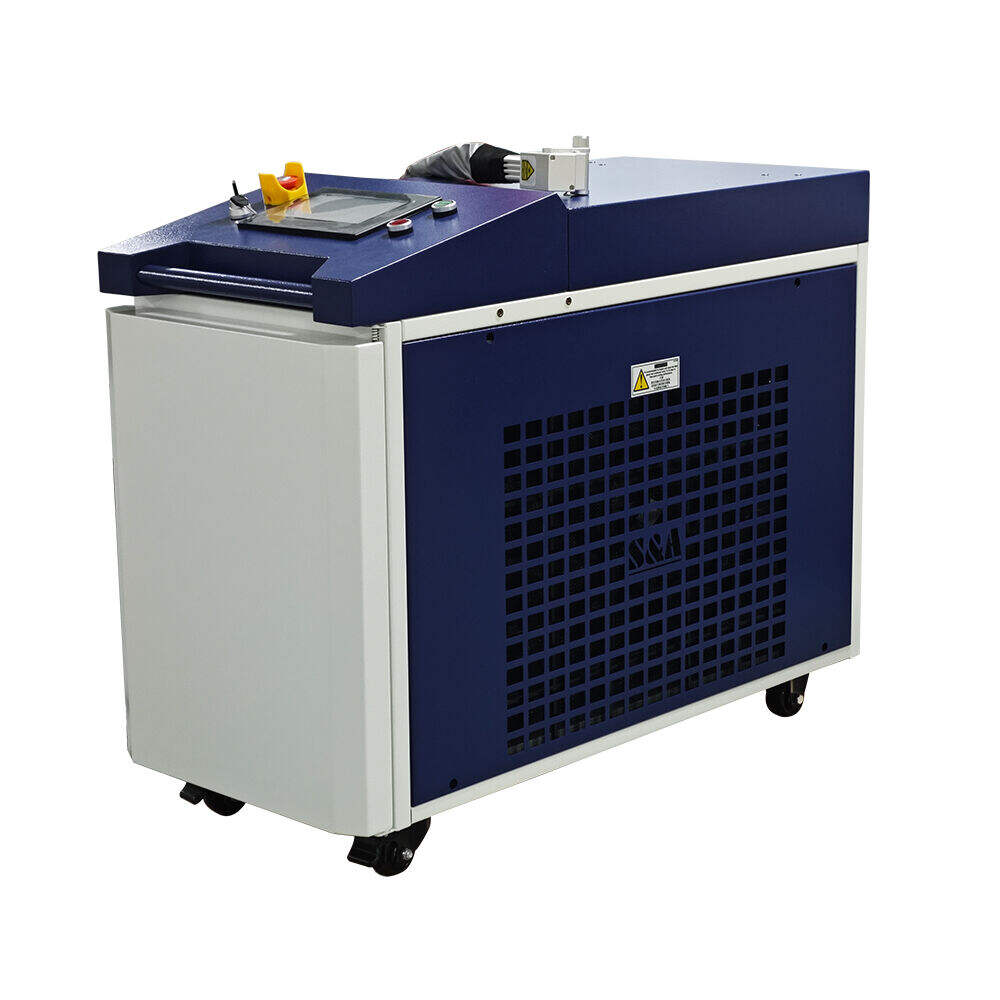
A structural steel fabricator in central China previously used sandblasting to clean I-beams and plate sections before welding — consuming 600 kg of blasting media daily, generating silica dust requiring full respiratory protection, and wearing through blast nozzles at approximately one per week. The fabricator invested in a 1,000W pulsed fiber laser rust removal system from TY Laser, a manufacturer with 15 years of experience in Wuhan's Optics Valley serving over 140 countries. The system cleaned rust at approximately 10 square meters per hour on structural steel — slightly slower than sandblasting on flat plate but significantly faster on welded joints and bolt holes where the laser beam reached into recesses that blast media could not access uniformly. Abrasive media cost dropped to zero. Worker respiratory protection was reduced from full-face supplied-air respirators to safety glasses. The system achieved payback in 11 months from eliminated consumables alone.
What Laser Rust Removal Can and Cannot Do
Effective Applications and Known Limitations
Laser rust removal excels on light to moderate rust — flash rust, surface corrosion, and rust layers up to approximately 0.5 mm thickness. It is particularly effective on complex geometries: threaded fasteners, weld seams, machined surfaces with recesses, and embossed plates where mechanical abrasives cannot reach uniformly. It cleans without changing surface profile — important for precision-machined components where abrasive blasting would alter dimensions. Limitations include heavy scale rust exceeding 1 mm, where removal rate drops sharply because the laser energy cannot penetrate to the substrate efficiently. Deeply pitted rust — where corrosion has penetrated below the original surface — requires multiple passes and leaves pits visible after cleaning. Polished aluminum and copper reflect laser energy and clean slowly.
Comparing Laser to Traditional Rust Removal Methods
Sandblasting, Chemical Stripping, and Grinding vs. Laser
Sandblasting is fast on large flat surfaces but generates hazardous dust, consumes media, and erodes surface detail. Chemical stripping produces hazardous waste requiring licensed disposal. Mechanical grinding removes base metal along with rust. Laser rust removal eliminates consumables, produces no secondary waste beyond captured rust dust, and leaves substrate dimensions unchanged. The trade-off is higher initial equipment cost — 500W to 1,000W systems represent significant capital investment — and slower removal on very heavy rust.
What to Look for in a Laser Rust Removal System
Five Specifications That Determine Performance
First, laser power — 200W to 500W for light rust; 1,000W to 2,000W for industrial structural steel. Second, pulse duration — nanosecond for general use; femtosecond for heat-sensitive substrates. Third, scanning width — typically 100 mm to 300 mm, with uniform energy distribution across the full width. Fourth, portability — handheld heads with fiber-delivered laser for on-site work; stationary for workshop lines. Fifth, fume extraction — integrated at the cleaning head. TY Laser provides laser rust removal systems spanning portable units to high-power stationary configurations, distributed to over 140 countries.
Frequently Asked Questions
Does laser rust removal really work?
Yes. Laser rust removal uses high-energy pulses absorbed by iron oxide to vaporize rust without damaging underlying steel. A 1,000W system removes rust at up to 15 square meters per hour. TY Laser has manufactured laser cleaning systems proven in industrial applications worldwide.
Does laser rust removal damage the metal underneath?
No. The 1,064 nm wavelength is absorbed approximately 95% by rust while clean steel reflects most energy. Substrate ablation is typically below 0.1% — the surface is cleaned, not cut or eroded.
How fast is laser rust removal compared to sandblasting?
A 1,000W laser rust removal system cleans 10 to 15 square meters per hour — slightly slower than sandblasting on flat surfaces, faster on complex geometries. The speed difference is offset by zero consumable cost and minimal operator protection requirements.
What types of rust can laser cleaning remove?
Laser rust removal handles flash rust, surface corrosion, and layers up to 0.5 mm. Heavy scale exceeding 1 mm requires multiple passes. Deeply pitted corrosion is cleaned to the substrate but pits remain visible.
Does laser rust removal require chemicals or abrasives?
No. Laser rust removal uses only light — no sand, chemicals, or water — producing no secondary hazardous waste beyond the captured rust dust extracted by the integrated fume system.
What maintenance does a laser rust removal system need?
A laser rust removal system needs periodic protective window cleaning, fume filter replacement, and chiller coolant maintenance. No consumable nozzles, media, or chemicals — the primary operating cost is electricity.