
 EN
EN



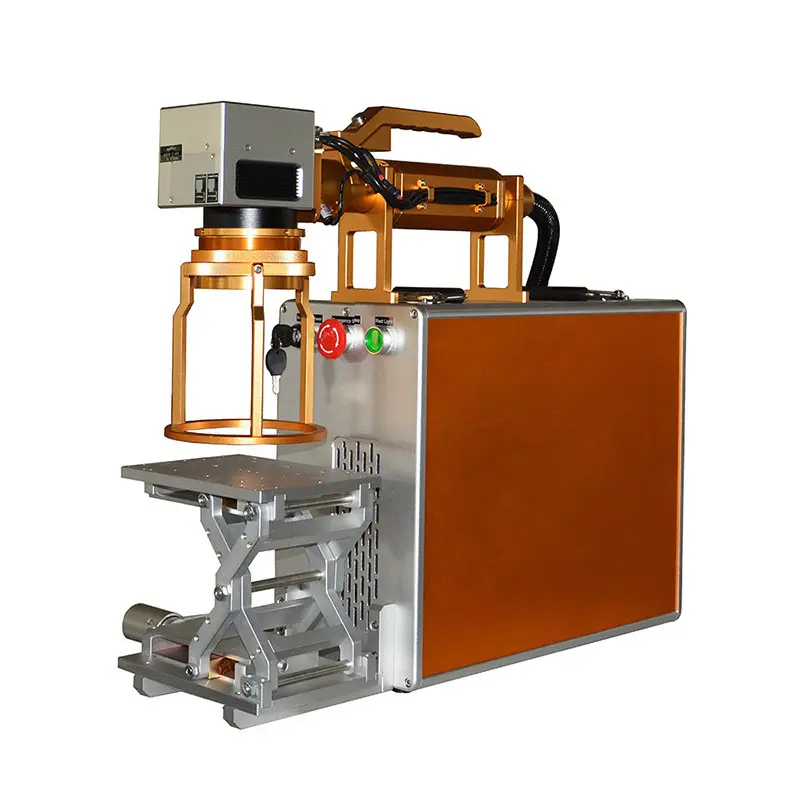
Core Physical Differences: Thermal Mechanisms and Material Interaction
Continuous vs. pulsed energy delivery: Sustained heating versus micro-ablation
Continuous wave (CW) lasers emit constant energy, causing gradual thermal buildup in both contaminants and substrates—a risk for melting sensitive base materials or altering metallurgical properties. Pulsed lasers, by contrast, deliver ultra-short, high-peak-power bursts (nanosecond to femtosecond durations) that vaporize contaminants via rapid micro-ablation. Because energy is deposited faster than heat can conduct into the substrate, pulsed systems minimize collateral thermal impact—making them the preferred choice for precision applications such as electronics restoration or conservation of historical artifacts.
Heat-affected zone (HAZ) control: Why pulsed lasers minimize subsurface damage on sensitive substrates
Pulsed lasers significantly restrict the heat-affected zone (HAZ)—the region where thermal exposure alters material microstructure. Research demonstrates up to 80% shallower HAZ depth compared to CW lasers when removing rust from aerospace-grade alloys, thanks to ablation occurring before substantial heat conduction begins. For temperature-sensitive substrates like polymer composites or thin functional coatings, this prevents delamination, warping, and mechanical degradation—advantages validated in micro-machining trials on copper-nickel substrates.
Application Fit: Matching Contaminant Type, Substrate Sensitivity, and Precision Needs
Pulsed laser cleaning machine advantages for rust, oxides, and weld spatter removal
Pulsed lasers are uniquely effective for tightly adhered inorganic contaminants—including rust, metal oxides, and weld spatter—due to their ability to induce instantaneous phase change without bulk heating. The micro-ablation mechanism selectively removes surface layers while preserving underlying metallurgy and dimensional integrity. This precision avoids distortion in thin-walled or heat-treated components and enables safe cleaning of complex geometries, supporting critical use cases in aerospace restoration and cultural heritage conservation.
When continuous wave lasers excel: High-throughput paint, coating, and biofilm removal
CW lasers shine in large-area, high-speed decontamination tasks involving thick organic layers—such as marine biofilms, industrial paints, or rubberized coatings. Their sustained thermal output rapidly decomposes these materials across broad surfaces, enabling efficient line-scanning on ship hulls, concrete infrastructure, or automotive bodies. While less suited for thermally delicate substrates, CW systems deliver unmatched throughput where ablation-level precision is unnecessary and uniform coverage is prioritized.
Operational Realities: Throughput, Safety, and Total Cost of Ownership
Speed comparison: Field data on cleaning rates for pulsed vs. CW systems across industrial use cases
Field data reveals a clear trade-off: CW lasers achieve 15–20% higher area coverage rates in paint stripping due to uninterrupted beam delivery, whereas pulsed systems outperform in thermally constrained scenarios—averaging 0.5–1.2 m²/hour for rust removal on aerospace components versus 0.3–0.8 m²/hour for CW. This reflects pulsed lasers’ efficiency at micro-scale ablation: dwell times are typically 2–5× shorter, enabling precise, controlled removal without cumulative heating.
ROI analysis: Upfront cost, power efficiency, maintenance, and consumables for pulsed laser cleaning machines
FAQ Section
What is the main difference between continuous wave and pulsed lasers?
Continuous wave lasers emit constant energy suitable for large-area cleaning tasks, while pulsed lasers deliver ultra-short energy bursts for precision applications with minimal thermal damage.
What kind of contaminants are best addressed by pulsed lasers?
Pulsed lasers excel at removing tightly adhered inorganic contaminants such as rust, metal oxides, and weld spatter without damaging the substrate.
Are pulsed lasers more energy-efficient than continuous wave lasers?
Yes, pulsed lasers consume approximately 30% less energy per cm² cleaned compared to continuous wave lasers.
What types of applications are continuous wave lasers most suited for?
Continuous wave lasers are ideal for high-throughput tasks like removing thick organic layers such as paints, coatings, and biofilms over large surface areas.
What is the lifespan of a pulsed laser cleaning system?
A pulsed laser cleaning system can exceed 100,000 operational hours with less than 10% power degradation over eight years.
Ready to Pick Ideal Laser Equipment for Your Laser Cleaning Projects?
Laser cleaning performance hinges heavily on selecting suitable laser types, and a well-matched pulsed laser cleaning machine lays solid foundation for stable, high-quality and cost-efficient industrial cleaning work. No delicate substrate restoration, rust removal and precision decontamination tasks can gain ideal outcomes without professional pulsed laser cleaning machine tailored to actual working demands. Partner with a seasoned OEM manufacturer with profound laser technology research and abundant industrial delivery experience. We supply reliable pulsed laser cleaning machine and continuous wave laser cleaning gear, supporting customized parameter tuning, structural configuration and function upgrade to match diverse contamination types and working environments. Whether you handle aerospace part maintenance, industrial metal refurbishment or cultural artifact protection, we offer targeted laser cleaning solutions that balance productivity, precision and long-term operational cost. Contact us today for free no-obligation technical consultation, and source premium pulsed laser cleaning machine to boost your industrial processing competitiveness.
Table of Contents
- Core Physical Differences: Thermal Mechanisms and Material Interaction
- Application Fit: Matching Contaminant Type, Substrate Sensitivity, and Precision Needs
- Operational Realities: Throughput, Safety, and Total Cost of Ownership
-
FAQ Section
- What is the main difference between continuous wave and pulsed lasers?
- What kind of contaminants are best addressed by pulsed lasers?
- Are pulsed lasers more energy-efficient than continuous wave lasers?
- What types of applications are continuous wave lasers most suited for?
- What is the lifespan of a pulsed laser cleaning system?