 ×
×
Oct 01,2026
TIANYU Laser · 30-Day Laser Cleaning Series · No. 01 · 4 min read
#LaserCleaning#RustRemoval#500WPulseLaser#IndustrialCleaning#TIANYULaser
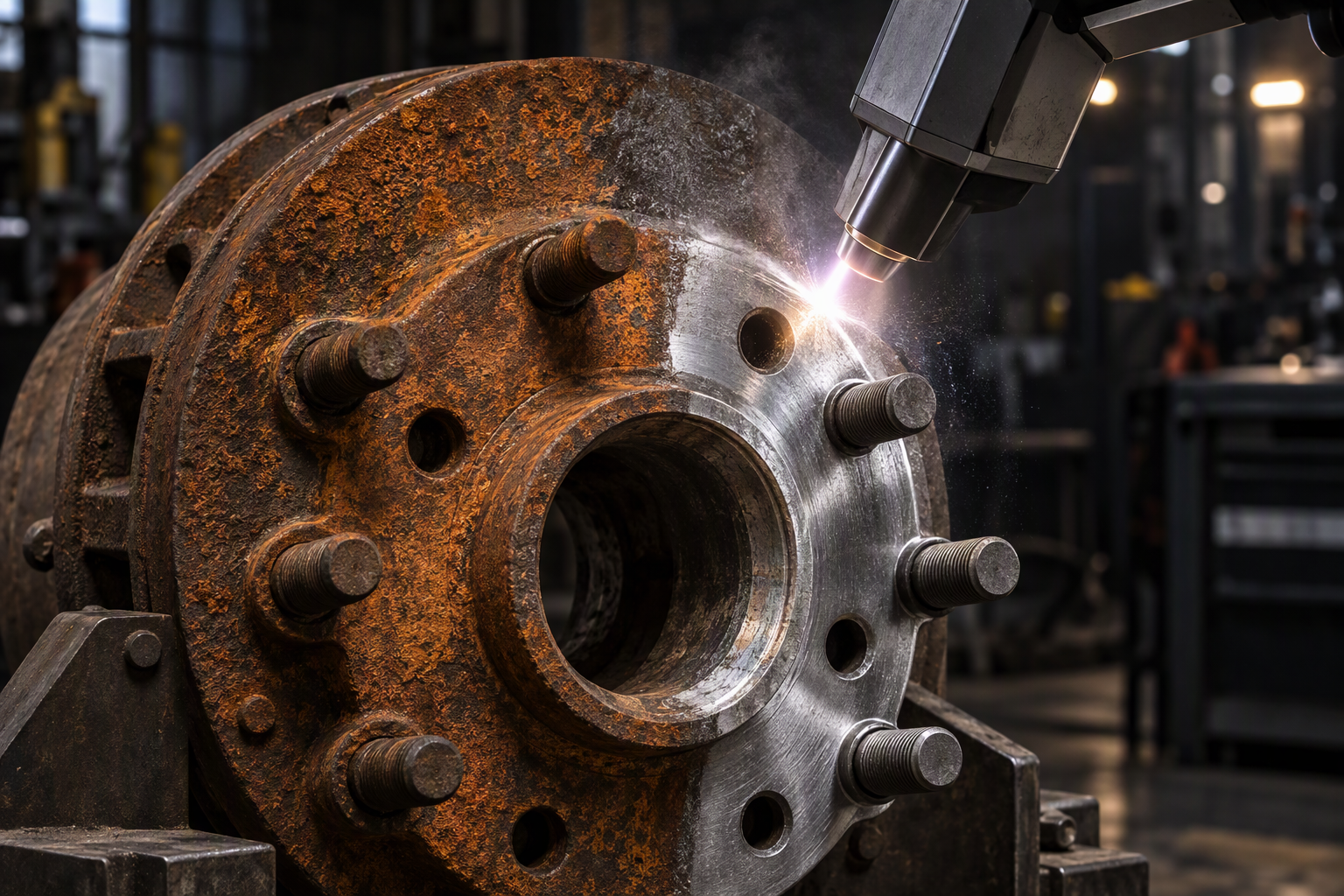
▴ One pass. The rusted half is gone, the cleaned half shows bare steel — and the part never left the workbench.
Ask most people to picture laser rust removal and you get the same image: a flame-thrower licking the metal until the rust burns to ash.
If that were true, the steel underneath would be warped and pitted within seconds.
Real laser cleaning uses pulsed near-infrared light at 1064 nm, and that wavelength is extremely picky about what it heats:
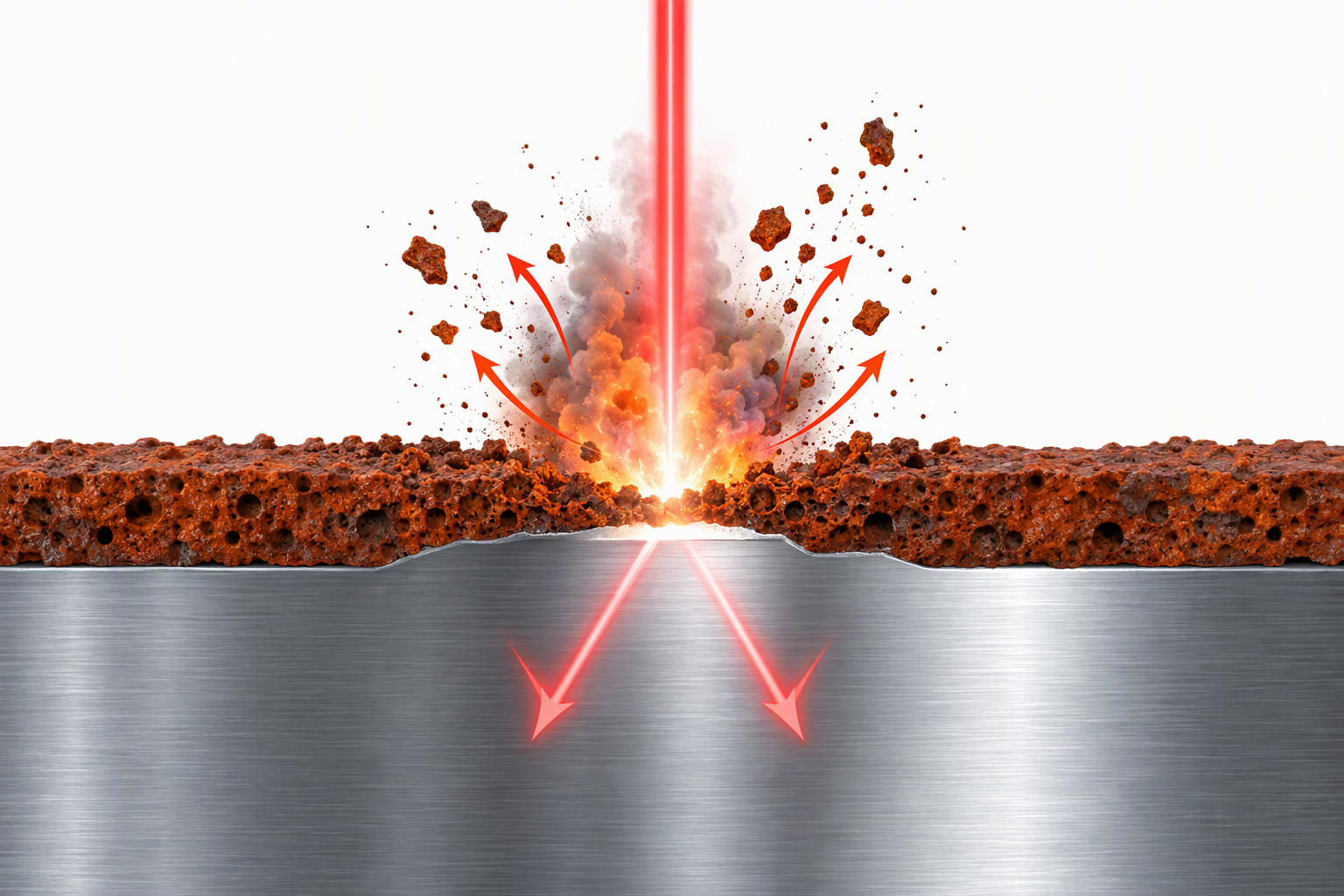
▴ Selective absorption: the oxide layer soaks up the beam, the steel underneath bounces it away.
Rust layer (Fe₂O₃ / Fe₃O₄): absorbs 80–90% of the energy → surface temperature spikes past 1,000℃ in microseconds.
Base steel (Fe): reflects 60–70% of the energy → temperature rises by only a few degrees.
In other words: the energy goes to the dirt, not to the part. That is the entire secret.
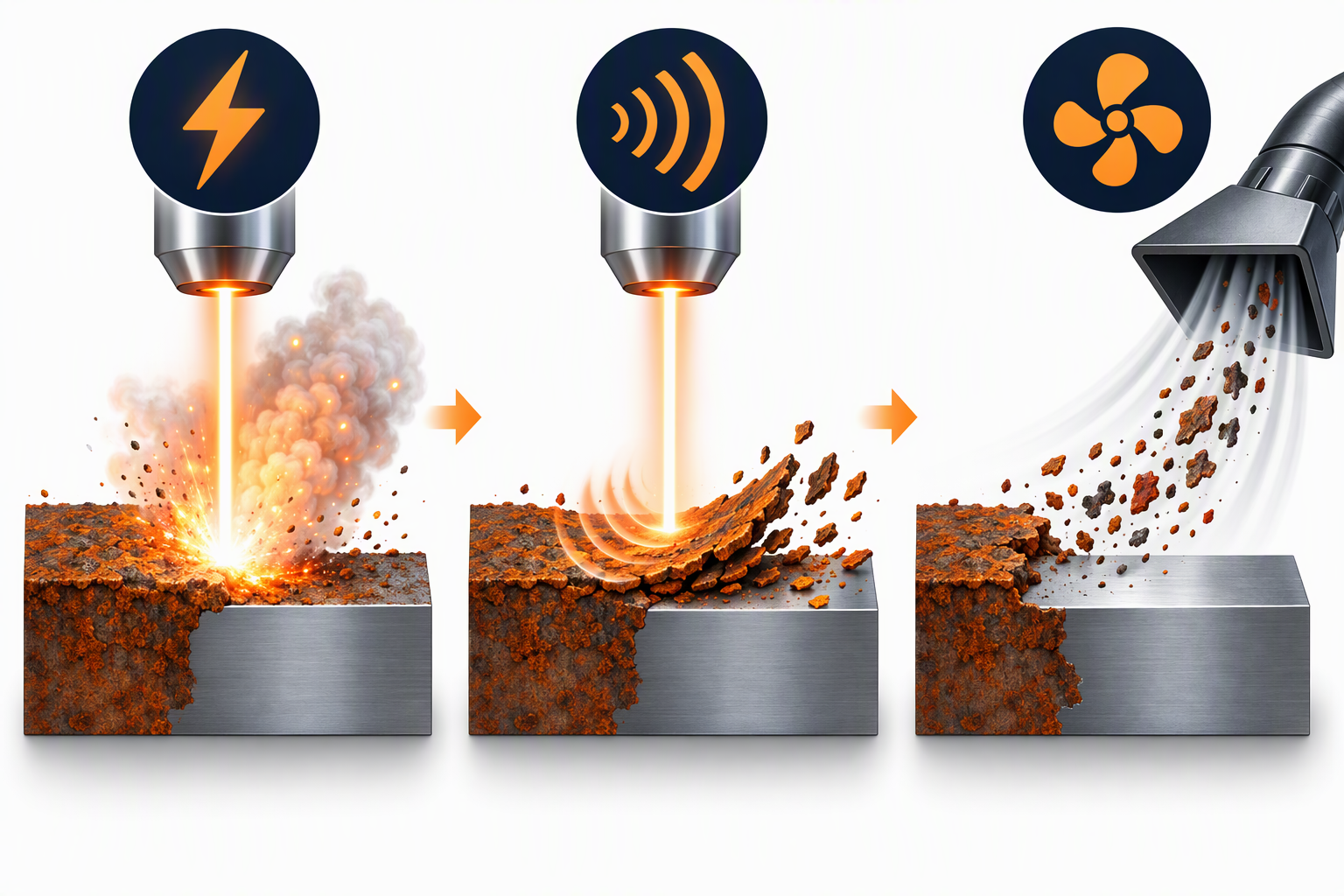
▴ Vaporize → peel → sweep. Three steps, a few hundred nanoseconds each.
| Factor | Sandblasting | Chemical Pickling | Laser Cleaning |
|---|---|---|---|
| Touches the base metal? | Yes (abrasive impact) | Yes (acid attack) | No |
| Consumables | Garnet / steel grit | HCl / H₃PO₄ | None |
| Waste stream | Heavy dust, spent media | Hazardous acidic effluent | Minimal, dry & filterable |
| Precision | Millimetre-scale, no masking | Whole-part immersion | 0.1 mm spot, selective areas |
| Crew needed | 2–3 operators | 2 + hazmat licence | 1 handheld operator |
| Cost per m² (indicative) | USD 4–8 | USD 3–6 + disposal fees | USD 0.8–1.5 (power only) |
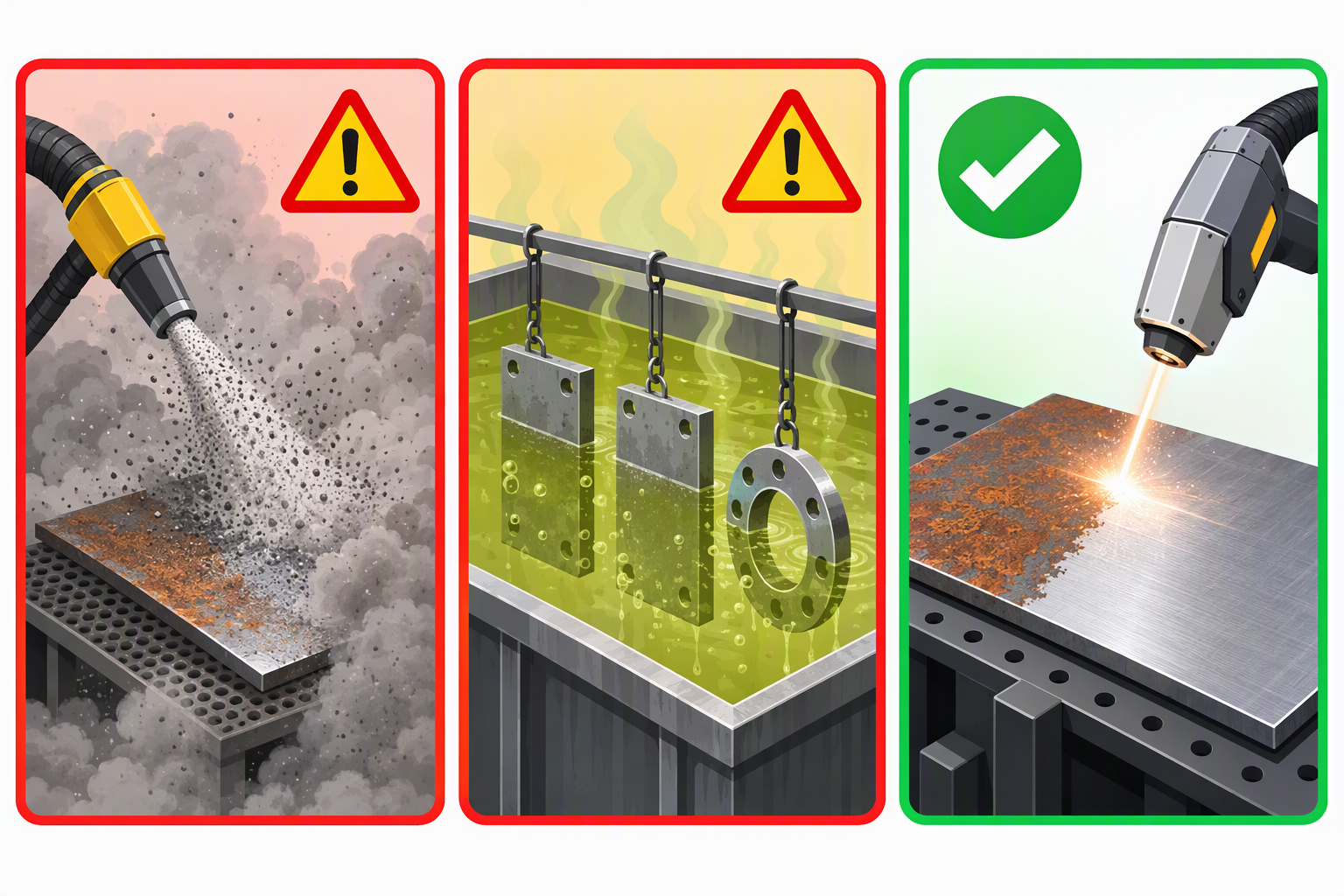
▴ Same job, three methods. Two leave a mess behind — one does not.
A continuous-wave laser is like holding a blowtorch still — heat keeps soaking into the base metal and the part starts to distort.
A pulsed laser is like a rapid series of slaps. Each pulse lasts only 100–200 nanoseconds, so the heat is cut off before it can spread:
Result: all the energy strips the contamination, almost none of it reaches the substrate.
That is why a 500 W pulsed unit can clean a plate and you can lay your hand on it straight afterwards — the base metal stays cool.
Rust, mill scale, oil, grease, paint, oxide layers, weld slag and carbon deposits — anything dark and highly absorbent comes off cleanly.
Three cases where you should think twice:
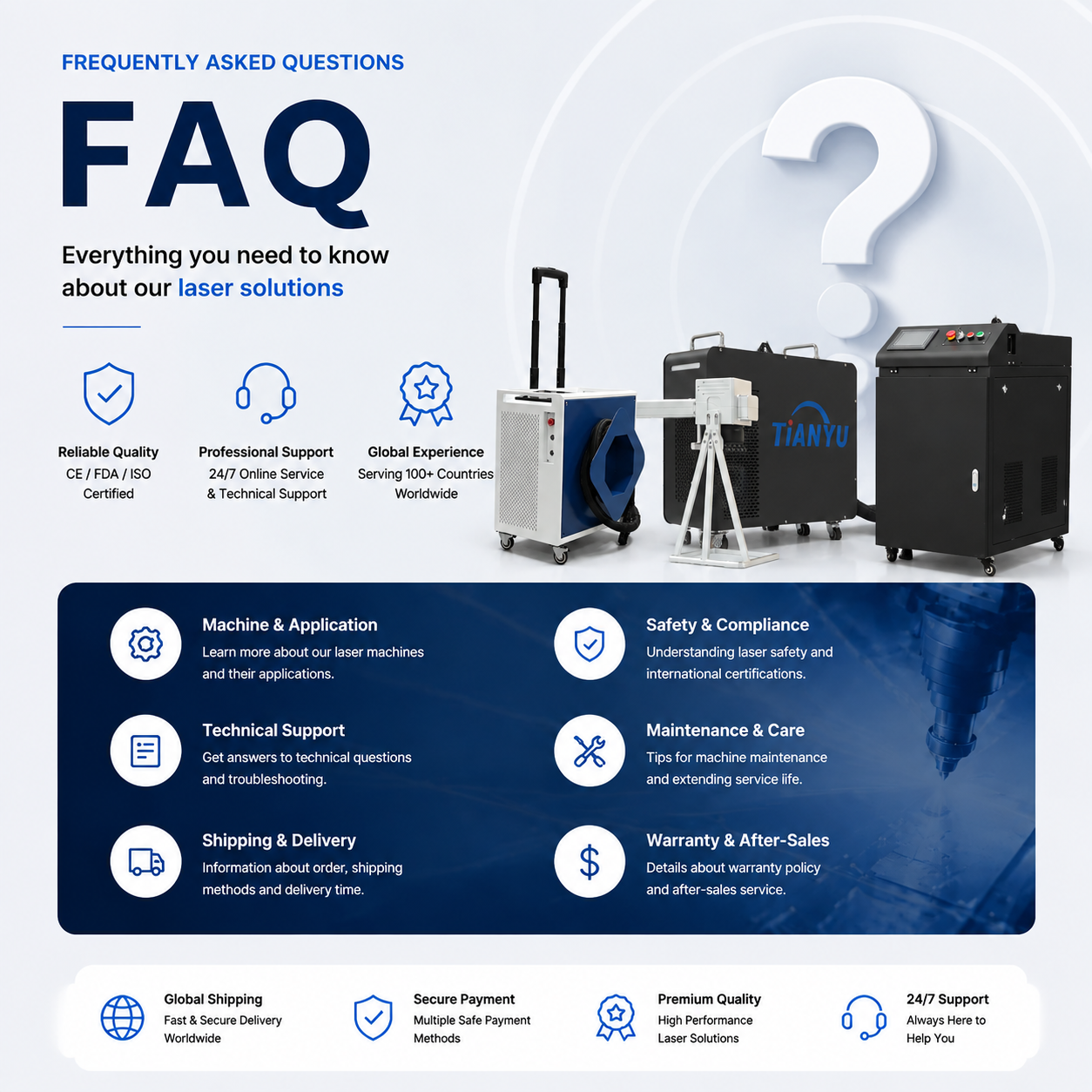
▴ TIANYU 500 W portable pulsed laser cleaner — trolley-case design, CE certified, 100–6000 W range available.
👉 Get a FREE sample-cleaning video + quotation
Send us a photo of your workpiece with the word "SAMPLE" — we reply within 24 hours.
About Wuhan TIANYU Laser
Wuhan Maohe Tianyu Laser Equipment Co., Ltd. — 100 W to 6000 W portable, benchtop and robotic laser cleaning & welding systems.
CE certified. Exporting to Europe, Southeast Asia and the Middle East.
OEM / ODM available for housing, power and scan width.
Part 01 of the "30 Laser Cleaning Questions" series.
Next → "No Water, No Chemicals, No Grit: How Laser Cleaning Pulls Off 3-Free Rust Removal"
Follow us — one practical insight every day.

 EN
EN