
 EN


Contamination Challenges in Automotive Manufacturing Demand Substrate-Safe Precision
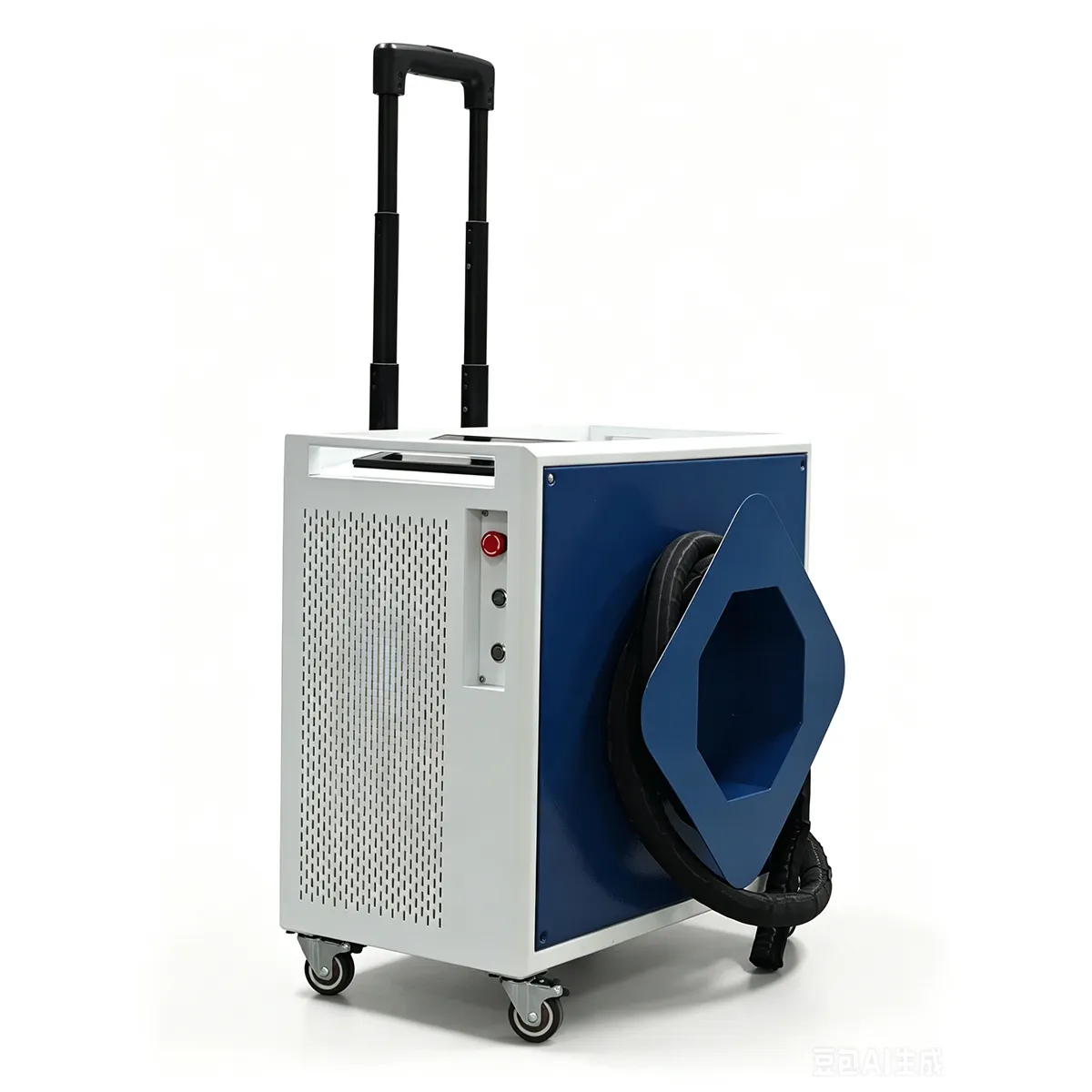
Automotive surfaces carry layered contamination that directly undermines downstream process quality. A custom laser cleaning machine removes those layers without altering the base material.
Rust, oils, weld spatter, and zinc oxide jeopardize weld integrity and paint adhesion
Rust, forming oils, weld spatter, and zinc oxide commonly appear on body panels, chassis components, and battery enclosures—compromising electrical conductivity at weld joints and creating weak fusion zones. Residual oils or zinc oxides also impair paint adhesion, leading to cratering, delamination, and premature corrosion. In automotive body shops, contaminant-related paint defects account for up to 30% of rework hours (2026 process audits). Traditional abrasive blasting risks embedding particles or deforming thin substrates; solvent wiping often leaves a film that lifts coatings later. In contrast, laser cleaning selectively vaporizes surface contaminants while preserving the base metal profile. The process is repeatable and can be precisely targeted—e.g., only along a weld seam or bonding zone—reducing rework and improving long-term durability. This level of precision is critical: just a few microns of contamination can determine weld test pass/fail outcomes.
Material sensitivity: Aluminum alloys, coated steels, and EV battery components require non-abrasive, non-thermal cleaning
Aluminum alloys used in closures and chassis parts are soft and heat-sensitive. Coated steels risk losing corrosion protection if the coating is burned or scratched. EV battery components—including cell housings, busbars, and thermal interface surfaces—demand ultra-clean, residue-free surfaces for reliable laser welding and structural adhesive bonding. Abrasive media can leave conductive residue inside tight assemblies, raising short-circuit risk; thermal methods may alter grain structure or damage thin foils. Laser cleaning avoids both pitfalls using short pulses and tightly controlled energy density—minimizing substrate heating and eliminating mechanical wear. Distortion and metallurgical changes remain negligible, making it ideal for thin-walled parts and multi-material assemblies. Because optimal parameters vary across materials, automotive plants specify custom laser cleaning machines—not generic units—to ensure consistent, validated performance across aluminum, coated steel, copper, and composites.
Production Integration Drives Custom Laser Cleaning Machine Configuration
Production integration is the primary driver of custom laser cleaning machine configuration. Automotive plants must align cleaning speed, access geometry, safety enclosures, fume extraction, and data interfaces with the surrounding production line. A representative production trial is typically required to validate cycle time, repeatability, and substrate response before full automation. Without early integration planning, even a technically capable laser cleaning system can create bottlenecks or trigger costly line modifications. Inline, in-situ, and robotic-cell configurations impose distinct constraints on layout, safety, and process control—meaning beam delivery, laser parameters, and guarding must be defined before procurement, not adapted afterward.
Inline, in-situ, and robotic-cell integration: balancing throughput, floor space, and line changeover flexibility
| Integration mode | Throughput | Floor space | Changeover flexibility | Typical production role |
|---|---|---|---|---|
| Inline | Highest | Fixed footprint in line | Low | Continuous cleaning of body panels, blanks, or weld seams |
| In-situ | Lower | Minimal or portable | High | Spot repair, tooling cleaning, and maintenance zones |
| Robotic-cell | Medium-high | Enclosed cell footprint | Medium-high | Complex 3D parts, mixed-model lines, and EV battery components |
Inline configurations maximize throughput but limit flexibility—the cleaning head, guarding, and part handling are fixed in place. In-situ setups preserve floor space and allow rapid redeployment, though they often rely on manual or semi-automated positioning. Robotic-cell integration balances these trade-offs: a custom laser cleaning machine mounted on an industrial robot can clean complex geometries and switch tasks via program updates—provided safety interlocks, fume extraction, and motion synchronization are fully validated. The optimal choice depends on required surface condition, contaminant consistency, part geometry, and the next production step. As such, integration mode must be selected concurrently with cleaning optics and control software—not as a retrofit.
OEM Validation Requirements Mandate Hardware-Software Co-Design
PPAP Stage 3 compliance demands full parameter traceability, repeatability, and SA-level documentation
PPAP (Production Part Approval Process) Stage 3 requires suppliers to demonstrate that a production process is stable, capable, and fully documented. For laser cleaning, this means validating every pulse. The control system must record laser power, pulse energy, scan speed, focal position, and overlap for each cleaned component—and link that dataset to a unique serial number. Repeatability requires maintaining all parameters within narrow control limits across hundreds of cycles. SA-level documentation adds formal control plans, PFMEA (Process Failure Mode and Effects Analysis), and measurement system analysis. A custom machine embeds these records directly into the PLC and exports them to plant quality databases. Validation engineers also expect role-based user access controls, tamper-proof audit trails, and automated backup routines. Without this integrated software layer, even a high-performing cleaning cell will fail PPAP Stage 3—OEM auditors reject incomplete logs before any durability or corrosion testing begins.
Why off-the-shelf laser cleaning machines fail validation without custom optics, motion control, and MES interface
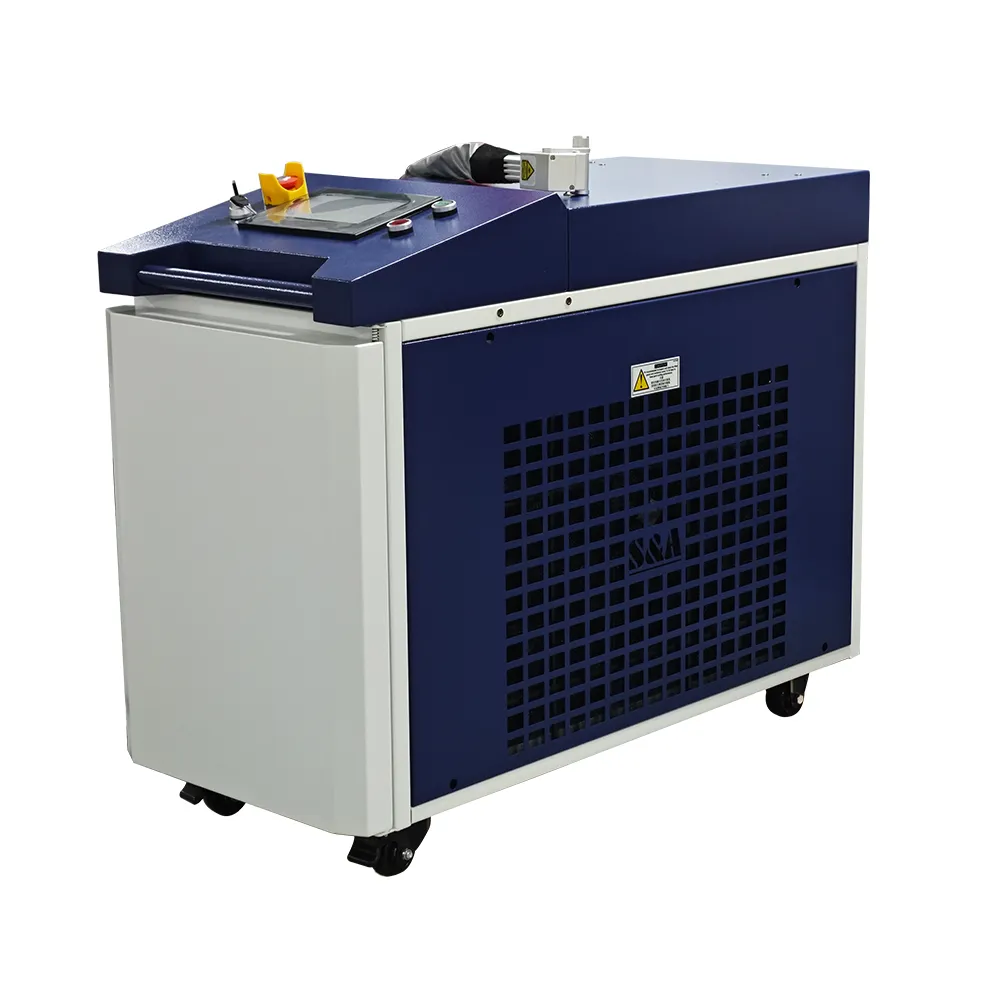
Off-the-shelf laser cleaning machines typically use fixed optics and open-loop motion control—limiting beam shape and energy distribution on complex automotive geometries like weld seams, battery trays, and stamped brackets. Custom optics are essential to reach tight corners without damaging thin substrates or overheating sensitive coatings. Standard scan heads often lack encoder feedback, allowing scan speed to drift with ambient temperature. Motion control must synchronize the scanner with robot or gantry axes to maintain precise overlap—especially during curved or variable-radius paths. Equally critical is the MES (Manufacturing Execution System) interface: a custom machine sends job parameters, alarm codes, and cleaning verification data directly to the plant’s MES. Off-the-shelf units rarely support native integration, requiring error-prone middleware. The result? A system that cleans well in a demo—but fails PPAP validation on the line. Custom optics also enable dynamic beam shaping for aluminum alloys, coated steels, and copper busbars, ensuring effective cleaning without substrate damage.
TCO and ROI Justify Custom Laser Cleaning Machine Investment
Initial purchase price misleads. Entry-level handheld laser cleaning units start around $8,000–$15,000, while automated industrial systems exceed $100,000. But total cost of ownership (TCO) includes energy, maintenance, labor, consumables, and waste disposal. In high-volume automotive applications—above 50,000 parts per year on aluminum or coated steel—payback typically occurs within 12–24 months (2026 industry analysis). The process eliminates chemical consumables, reduces weld scrap, and shortens cycle time. A custom laser cleaning machine configured for inline or robotic-cell integration further lowers labor hours and avoids secondary surface prep steps. Reduced abrasive media purchases, eliminated chemical handling, and extended tooling life translate directly into measurable annual savings. Operations with consistent utilization often recover investment in 1–3 years. This combination of variable-cost elimination and throughput gain makes the investment a defensible capital request—not a discretionary expense.
FAQ
What are the common contaminants in automotive manufacturing?
Common contaminants include rust, forming oils, weld spatter, and zinc oxide, which can compromise weld integrity, paint adhesion, and durability.
Why is laser cleaning preferred over abrasive blasting or solvent wiping?
Laser cleaning ensures precise removal of surface contaminants without altering the base material, avoiding issues like substrate deformation or residue films.
What kinds of materials benefit from laser cleaning?
Materials such as aluminum alloys, coated steels, and EV battery components benefit due to their sensitivity to abrasive and thermal cleaning methods.
How does production integration affect the configuration of laser cleaning machines?
Integration considerations include cleaning speed, access geometry, and surrounding production constraints to align with manufacturing workflows.
What validation requirements must be met for OEM approval?
OEM approvals require traceability, repeatability, and comprehensive documentation, all achievable through custom hardware-software co-design.
What is the expected ROI for custom laser cleaning machines?
Payback typically occurs within 12–24 months for high-volume applications due to reductions in consumables, labor, and rework costs.
Table of Contents
- Contamination Challenges in Automotive Manufacturing Demand Substrate-Safe Precision
- Production Integration Drives Custom Laser Cleaning Machine Configuration
- OEM Validation Requirements Mandate Hardware-Software Co-Design
- TCO and ROI Justify Custom Laser Cleaning Machine Investment
-
FAQ
- What are the common contaminants in automotive manufacturing?
- Why is laser cleaning preferred over abrasive blasting or solvent wiping?
- What kinds of materials benefit from laser cleaning?
- How does production integration affect the configuration of laser cleaning machines?
- What validation requirements must be met for OEM approval?
- What is the expected ROI for custom laser cleaning machines?