
 EN



Laser Power Ratings: Matching Output to Application Needs
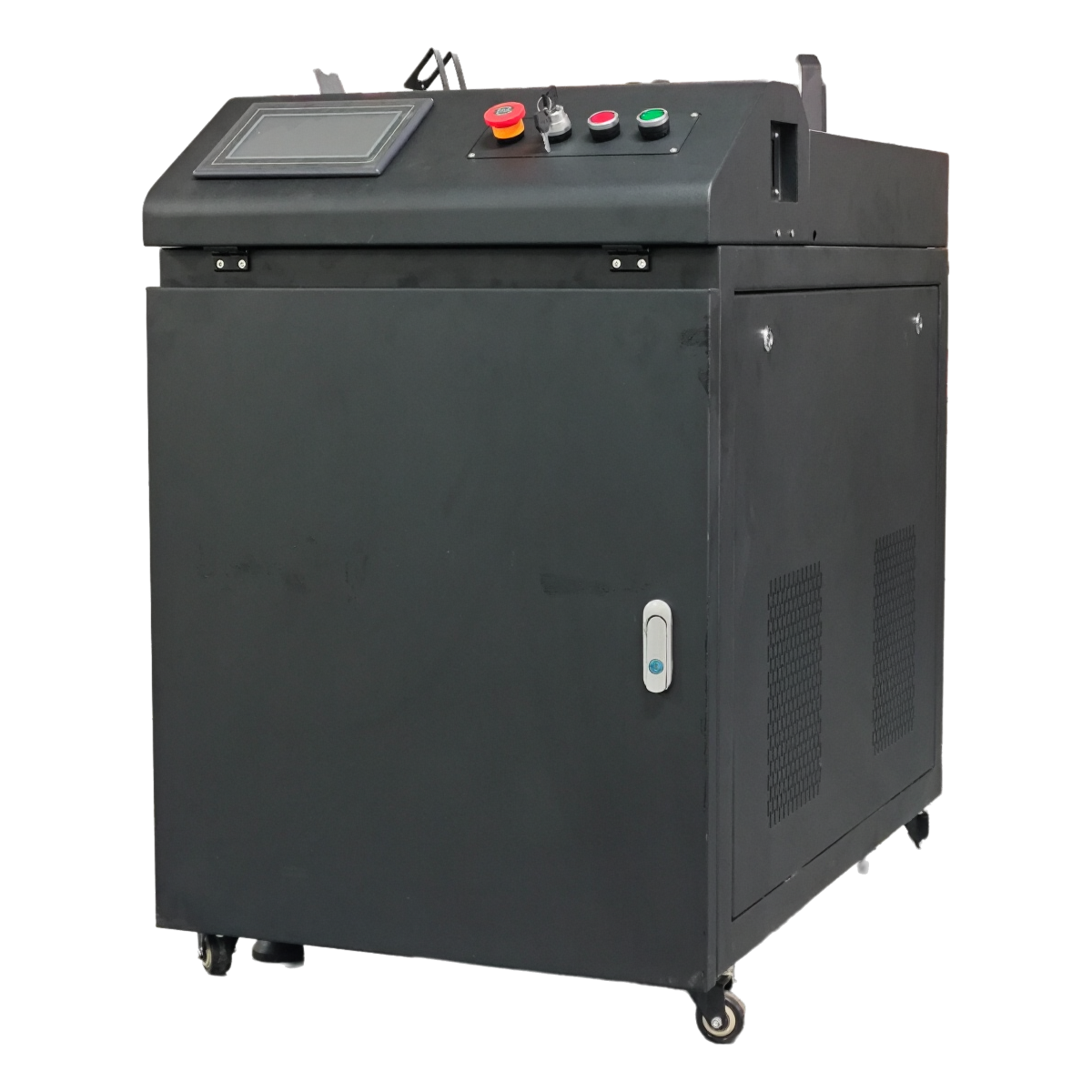
Selecting the right laser power requires more than comparing maximum wattage. Substrate type, coating thickness, heat sensitivity, and required throughput all shape the ideal power range for a given cleaning task.
CW vs. Pulsed Options (100–3000W): Trade-offs in Speed, Precision, and Heat Management
Continuous-wave (CW) systems deliver constant average power—ideal for rapidly removing thick rust, mill scale, or heavy paint from robust steel surfaces. At the upper end of the 100–3000W range, a 2000W CW handheld unit achieves high material removal rates, but its sustained energy input risks warping thin sheet metal, damaging heat-sensitive alloys, or causing surface discoloration. Pulsed lasers, by contrast, deliver high peak power in short bursts—allowing time for thermal dissipation between pulses. A 200W pulsed system can effectively remove light oxides and organic contaminants with minimal substrate heating and superior edge definition. The trade-off is speed: pulsed units remove less volume per minute than comparable CW systems. For demanding applications on durable substrates, CW offers efficiency and cost-effectiveness; for precision work on molds, electronics, or thin panels, pulsed operation provides essential thermal control. Duty cycle also reflects this distinction—higher CW power demands robust active cooling and longer cooldown intervals, while pulsed systems maintain stable performance over extended periods.
The 200–500W Sweet Spot for Industrial Handheld Laser Cleaning Machines
For most industrial maintenance and surface preparation tasks, systems in the 200–500W range deliver the optimal balance of removal rate, portability, and substrate safety. A 200W unit reliably handles light rust, oxides, and thin coatings on carbon steel or aluminum without excessive thermal load. At 300–400W, cleaning speed increases meaningfully, supporting efficient removal of medium-thickness paint, epoxy, and corrosion layers in fewer passes. A 500W system further improves throughput for production-scale work—especially where consistent coverage matters more than ultra-fine thermal control. This range aligns well with standard single-phase or compact three-phase power supplies common in workshops and field service environments. Above 500W, weight, cooling complexity, and operator fatigue rise sharply; below 200W, cleaning becomes impractically slow for most industrial applications. Crucially, heat accumulation remains manageable across this mid-power band, enabling longer duty cycles and reducing downtime. As a result, the 200–500W class has become the industry standard for rust removal, paint stripping, and surface prep in manufacturing, marine, and energy infrastructure maintenance.
Precision Control Systems: Pulse Parameters and Beam Adjustability
Precision in handheld laser cleaning depends on matching pulse timing and beam geometry to both contamination characteristics and substrate limitations. Two integrated control layers determine real-world performance: pulse parameter tuning and dynamic beam adjustment.
How Pulse Duration, Frequency, and Duty Cycle Affect Cleaning Efficiency and Substrate Safety
Pulse duration determines how long each laser pulse interacts with the surface. Nanosecond pulses deliver high peak power with minimal heat diffusion—making them ideal for delicate substrates like aluminum or thin sheet metal. Microsecond- to millisecond-duration pulses increase energy transfer per pulse, improving removal rates for thick rust or multi-layered coatings—but at higher thermal risk. Pulse frequency (measured in Hz or kHz) governs how many pulses strike a given area per second. Higher frequencies improve coverage speed but can cause thermal buildup if overlap is excessive. Duty cycle—the percentage of time the laser is actively emitting—directly regulates average power and cumulative heat input. Lower duty cycles (10–30%) promote inter-pulse cooling and are especially valuable when working near thermal limits. These parameters must be tuned in concert—not in isolation—and saved as application-specific presets to ensure repeatability and prevent operator error.
| Parameter | Primary effect | Typical safety adjustment |
|---|---|---|
| Pulse duration | Controls energy per pulse and heat diffusion | Shorter for thin or heat-sensitive substrates |
| Pulse frequency | Sets pulse overlap and cleaning speed | Lower frequency for delicate surfaces |
| Duty cycle | Regulates average power and heat accumulation | Reduce to 20–30% for thermal control |
Real-Time Beam Shaping and Parameter Tuning for Dynamic Material Removal
Real-time beam shaping adjusts spatial energy distribution across the cleaning spot to match process demands. Traditional Gaussian beams concentrate intensity at the center—risking hot spots on thin or coated substrates—while flat-top profiles deliver uniform fluence, enhancing consistency and safety. Modern handheld systems allow on-the-fly changes to beam diameter, scan width, and oscillation pattern. For example, a narrow linear scan increases energy density for aggressive rust removal, whereas a wide, slow-oscillating pattern spreads energy more gently for paint stripping or oxide reduction. Effective operation also requires synchronization of laser parameters—including power, frequency, and scan speed—with manual movement velocity. Advanced systems incorporate closed-loop feedback from thermal sensors or surface monitoring to automatically adjust output and prevent overheating. Preloaded presets by material type and contamination severity reduce setup time and eliminate trial-and-error damage—critical when transitioning between rusted steel, oxidized aluminum, and polymer-coated surfaces during field work.
Ergonomic & Thermal Design: Enabling Sustained Operation in Field Environments
Weight, Balance, and Active Cooling: Why ≤35kg Is Critical for Operator Fatigue and Uptime
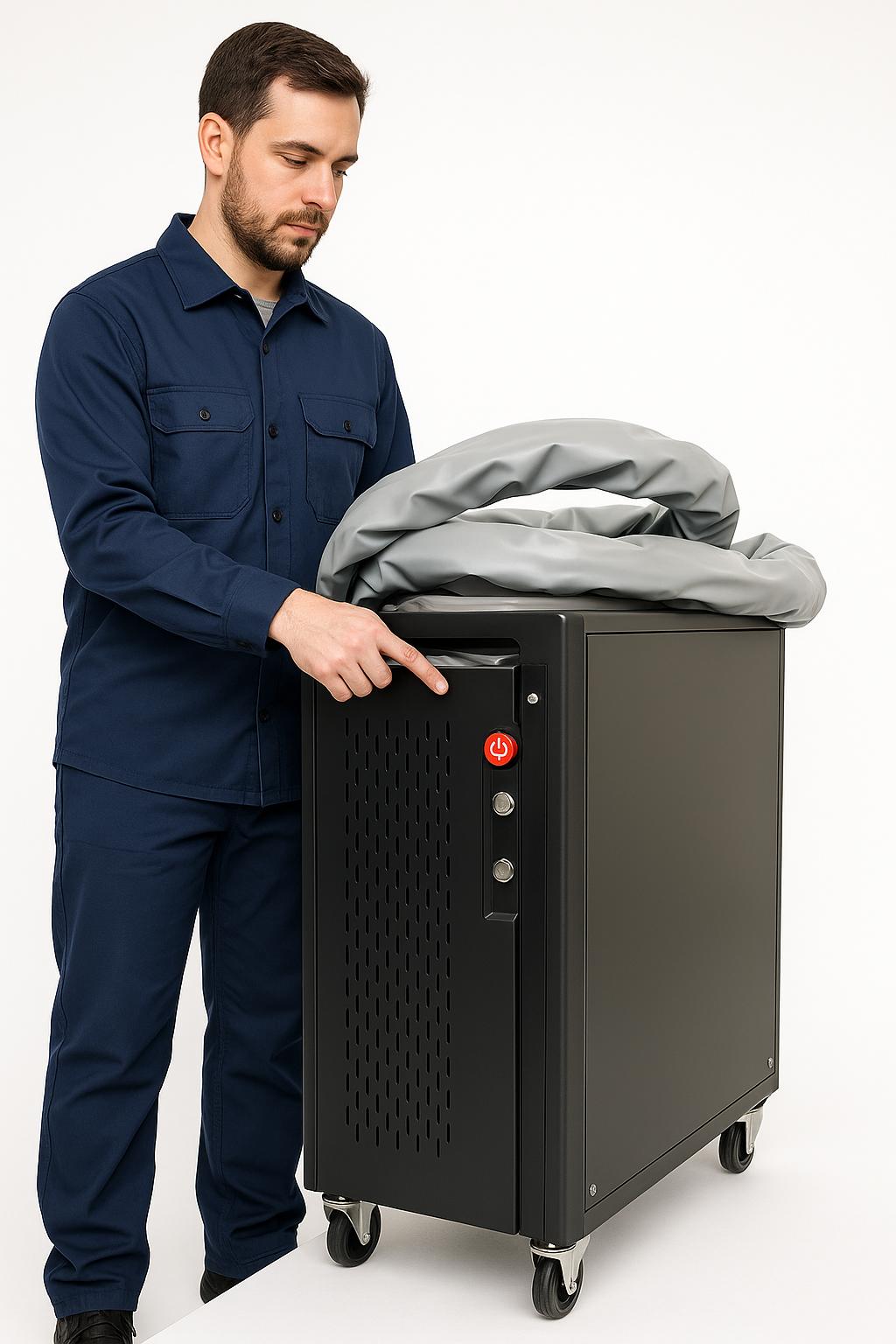
In field maintenance, a handheld laser cleaning machine exceeding 35 kg typically requires two-person handling or frequent rest breaks—significantly limiting mobility and workflow continuity. Staying at or below this threshold supports safe one-person repositioning, overhead use, and vertical passes. Equally important is weight distribution: front-heavy designs amplify wrist torque and reduce beam stability, while balanced mass centers enhance control and reduce fatigue over time. Active cooling—whether closed-loop liquid or high-efficiency forced-air—is non-negotiable for sustained operation. It prevents localized heating near the grip, avoids power derating during continuous cleaning, and maintains consistent output across multi-hour shifts. This 35 kg ceiling isn’t arbitrary—it reflects decades of field experience and ergonomic research, directly correlating with reduced operator fatigue, fewer errors, and higher first-pass cleaning success rates. For technicians working 4–6 hour shifts, these design choices translate directly into improved uptime, reliability, and job completion confidence.
Wavelength and Non-Contact Operation: Safety, Compatibility, and Process Reliability
1064nm Standard vs. 355nm Niche Use: Absorption Science Across Rust, Oxides, Paint, and Coatings
The 1064 nm wavelength is the industrial standard for laser cleaning because rust, iron oxides, and ferrous metals absorb near-infrared energy strongly—enabling efficient contaminant ablation at moderate fluence levels. Its optical components are mature, robust, and cost-effective, making it the default choice for most maintenance and production applications. In contrast, 355 nm ultraviolet lasers serve specialized roles where minimal thermal penetration is essential—such as cleaning thin polymer films, sensitive electronics, or heat-labile coatings. UV photons disrupt molecular bonds directly, reducing reliance on thermal mechanisms—but require tighter optical alignment, more frequent maintenance, and carry higher operational costs. While 1064 nm delivers superior value across broad industrial use cases, 355 nm may be justified when substrate integrity outweighs throughput or cost considerations. Critically, non-contact beam delivery eliminates mechanical wear and abrasive media consumption—but does not eliminate safety requirements. Proper fume extraction, operator training, and engineered enclosures remain essential to mitigate airborne particulates and protect against reflective hazards. Selecting wavelength based on contaminant absorption—not just substrate compatibility—ensures consistent performance across mixed-batch production and prevents reflectivity-related inefficiencies or thermal damage.
FAQ
What factors should I consider when selecting a laser power rating?
Consider substrate type, coating thickness, heat sensitivity, and the required throughput to determine the ideal power range for your cleaning task.
What are the key differences between CW and pulsed laser systems?
Continuous-wave (CW) systems provide constant power ideal for robust and heavy-duty tasks, while pulsed systems deliver short bursts of high power to minimize heat and increase precision, suitable for delicate substrates.
What is the most commonly used laser power range for industrial cleaning?
The 200–500W range is the industry standard, offering a balance between material removal rates, portability, and substrate safety. It supports most industrial maintenance tasks effectively.
How do pulse parameters affect cleaning efficiency and safety?
Pulse duration governs heat diffusion, frequency determines cleaning speed, and duty cycle controls heat accumulation. These factors must be fine-tuned based on the material and coating characteristics.
Why is the 1064 nm wavelength a standard for laser cleaning?
The 1064 nm wavelength is highly effective for rust, oxides, and ferrous metals, offering cost-effective and efficient cleaning. In contrast, the 355 nm UV wavelength is reserved for specialized applications where minimal thermal impact is critical.