
 EN
EN


The Depth Difference: What Separates a Laser Marking Machine from a Laser Engraver
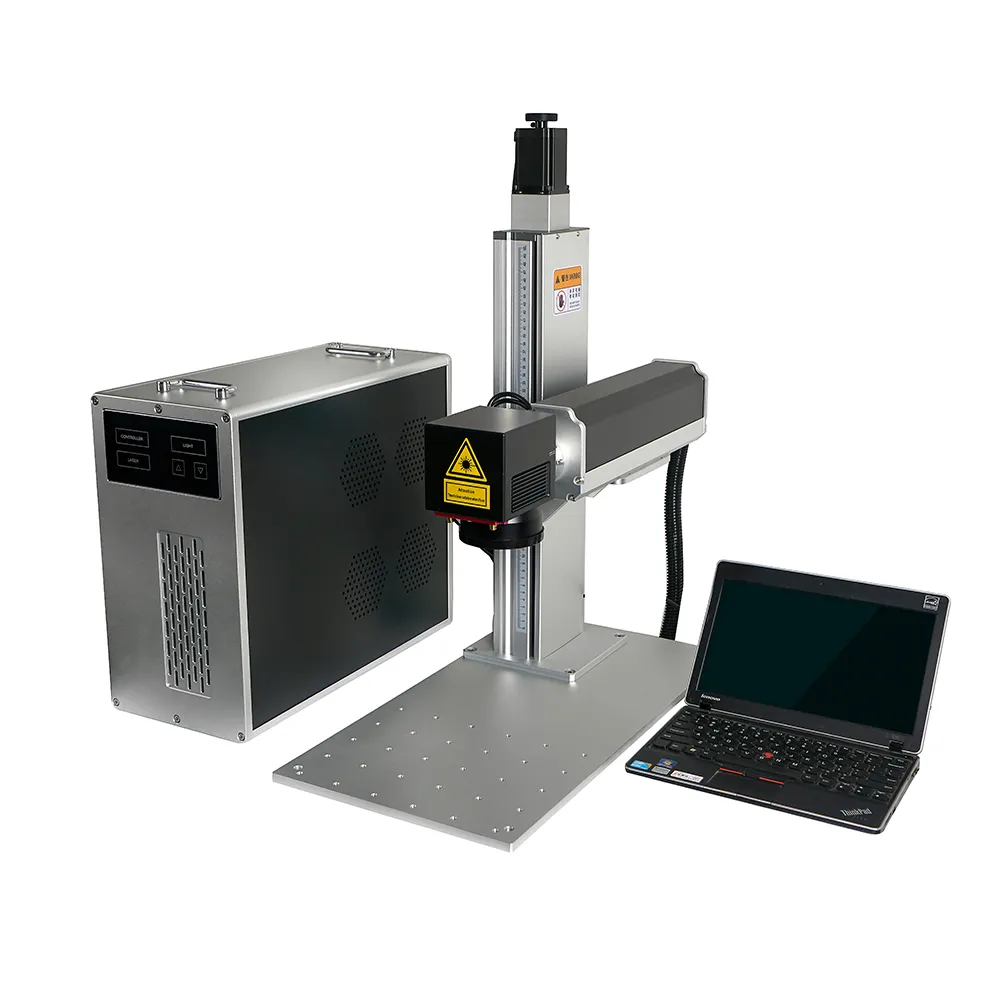
A stainless steel medical instrument marked with a UDI barcode must survive 1,000 autoclave sterilization cycles without the mark fading. An aluminum electronic enclosure engraved with a serial number must remain readable after anodizing. A glass cosmetic bottle marked with a brand logo must look identical to the tenth of a millimeter across 100,000 units. All three applications use a laser — but the first requires a laser marking machine that modifies the metal surface without removing material, the second requires a laser engraver that removes material to create depth, and the third requires a laser marking machine with UV wavelength that achieves cold marking without thermal stress. Calling all three processes "laser marking" is like calling welding, soldering, and brazing "metal joining" — technically true but practically useless when specifying equipment.
The technical distinction between a laser marking machine and a laser engraver is material removal. A laser marking machine modifies the surface through one of four mechanisms: annealing (heating the metal surface to create an oxide layer that appears black or colored — zero material removal, the mark is a chemical change), carbon migration (heating plastics containing carbon to bring carbon particles to the surface, creating a dark mark — zero material removal), color change (heating TiO₂-containing plastics to create a color-shift reaction), or foaming (heating plastic until gas bubbles create a raised, light-scattering mark). In every case, the laser marking machine's beam does not cut into the material. A laser engraver operates at higher power density and removes material — vaporizing a controlled depth of substrate to create a recessed mark that you can feel with a fingernail.
When Depth Matters and When It Does Not
Why Medical Devices Need Marking, Not Engraving
A laser-engraved UDI code on a surgical instrument creates a recessed groove where biological matter can accumulate during surgery — a contamination risk that sterilization validation protocols specifically test for. A laser marking machine creates the same UDI code as a surface-level dark mark with no groove, no contamination trap, and no change to the instrument's surface finish. This is why ISO 13485 medical-device quality systems and FDA UDI regulations effectively require laser marking (surface modification) rather than engraving (material removal) for surgical instruments. Maohe Tianyu Laser Equipment's fiber laser marking machines produce these surface-level marks at 1,000 characters per second with ±0.01 mm position accuracy — critical for the 0.5 mm character heights common in micro-UDI codes on small instruments. The laser marking machine achieves permanent, sterilization-resistant marks without creating the crevice that an engraver would leave behind.
Real-World Application: When the Wrong Machine Almost Shipped
A promotional-products company ordered a laser engraver to personalize stainless steel drinkware — thinking "engraving" was the correct term for any laser-applied mark. The engraver produced deep, tactile marks that looked premium on the first few units but took 22 seconds per mark — too slow for the 5,000-unit order with a two-week deadline. A Maohe Tianyu application engineer recommended switching to a fiber laser marking machine at 30W, which produced a dark annealing mark on the stainless steel in 3 seconds per unit — visually similar to the engraving but seven times faster because no material was being removed. The company met its deadline, and the cost per mark dropped from approximately 0.07 (engraving, accounting for labor and machine time) to 0.01 (marking) — a savings that paid for the laser marking machine within the first two large orders.
Frequently Asked Questions
Can a laser marking machine engrave?
No — a laser marking machine is designed for surface modification without material removal. Attempting to engrave (remove material) with a marking machine requires power densities above the machine's design specification, which overstresses the laser source and produces inconsistent depth. For deep engraving, use a dedicated laser engraver with higher peak power.
Can a laser engraver mark surfaces?
Yes — many laser engravers can operate at reduced power to produce surface marks. However, the minimum power setting on a high-power engraver may still be too high for delicate materials, and the engraver's larger spot size produces rougher marks. A dedicated laser marking machine with fine power control produces better surface-mark quality at faster speeds.
How deep can a laser engraver cut?
Fiber laser engravers typically achieve 0.01–0.5 mm depth per pass on metals, with multiple passes adding cumulative depth. CO₂ engravers achieve 0.1–3 mm per pass on wood and acrylic. Maximum practical engraving depth on metal with a fiber laser engraver is approximately 1–2 mm — deeper than that and the process becomes too slow for production.
What is the mark permanence of a laser marking machine?
Annealing marks on stainless steel survive 1,000+ autoclave cycles, salt-spray testing exceeding ASTM B117 standards, and chemical exposure including alcohol, acetone, and common disinfectants. The mark is a chemical change in the metal surface — it cannot be washed off, rubbed off, or removed without physically grinding away the surface layer.
Does a laser marking machine work on curved surfaces?
Yes — the galvo scanning system can mark on surfaces within the focal depth of field, typically ±2–3 mm from the focal plane. For highly curved surfaces (cylinders under 20 mm diameter), a rotary-axis attachment rotates the part during marking. Maohe Tianyu's enclosed markers support rotary attachments for cylindrical-part marking.
What file formats does a laser marking machine accept?
EZCAD2 software supports vector formats (AI, PLT, DXF) and bitmap formats (PNG, JPG, BMP). Vector files produce the sharpest marks because the galvo scanner follows precise path coordinates. Bitmap files are converted to dot patterns by the software — acceptable for logos but not for fine text or barcodes. Maohe Tianyu provides format guidance during installation training.